
Weigh In On Hawthorne Overcrossing
Here’s your chance to advocate for a pedestrian-and-bike centered project
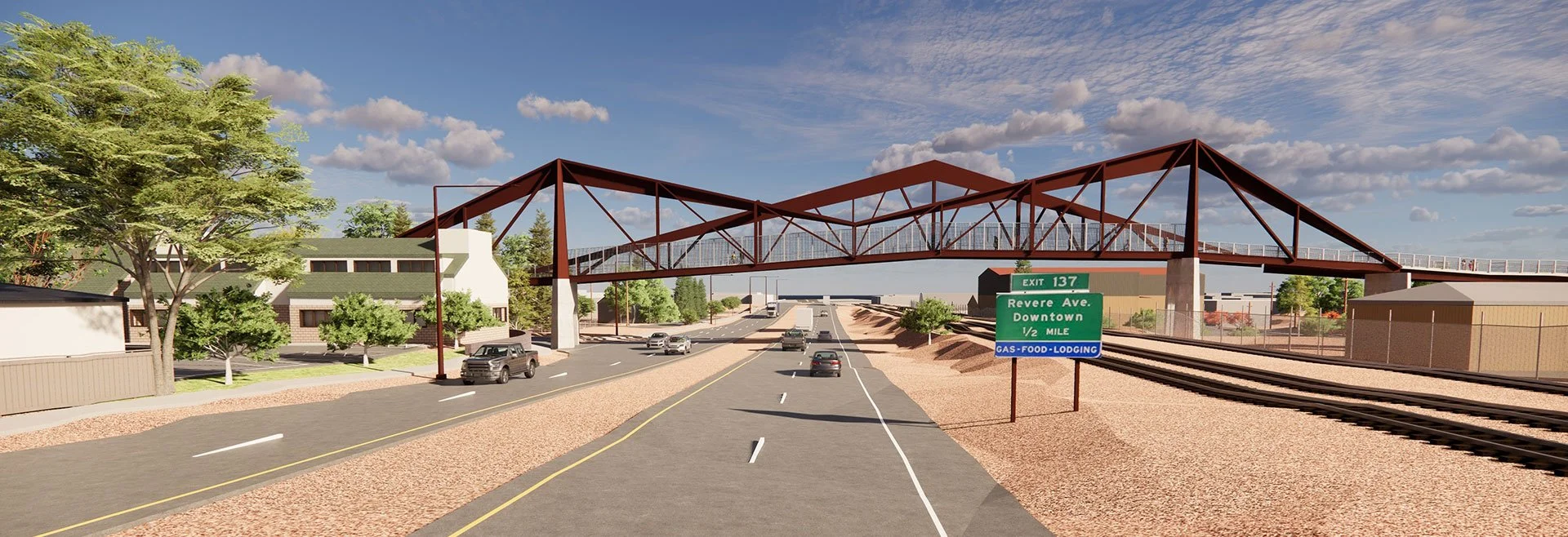
ODOT is collecting public opinion on the landings and approaches leading up to the Hawthorne Overcrossing which will enter the construction phase Fall 2027 - Fall 2028. Illustration: City of Bend
The Hawthorne Overcrossing - a dedicated overcrossing for both bicycle and pedestrian traffic over US 97 and the railroad tracks - is now in full-scale planning mode.
The design of the bridge itself has been finalized as a steel truss style structure with a mountain theme, and the Oregon Department of Transportation (ODOT) is now planning out the related landings (where the bridge touches down) and immediate approaches (where and how a user will travel on the 1-2 blocks leading up to the bridge).
ODOT has been soliciting public input via an in-person open house and an online open house that closes on Dec 9, 2025.
Join Our Call for a Car-Free Design for Approaching Hawthorne Overcrossing
Building this overcrossing is a once-in-a-century opportunity for our community and we need to help ODOT get it right.
As LandWatch and other partners reviewed the options presented, we saw some decent ideas. But, what’s missing in the suggested alternatives is a fully car-free design option.
While this project is still in the preliminary design phase, we want to see ODOT, working closely with the City of Bend, provide a car-free design for the landings, the immediate street approaches and, ultimately, the entire corridor. A car-free approach would align with the long-standing community vision for the Bend Central District and Core Area.
You don’t need to be a transportation expert to offer valuable input! The survey is thoughtfully laid out, so you will learn about the project as you go, and most questions will be about your commute and your travel preferences.
We urge you to use the online open house to call for a car-free design option.
If you’d also like to offer input on the current design ODOT put forward, we think Bend Bikes’ design feedback - outlined below - is spot on.
-
Support the Promenade Street or Two-Way Cycle Track options. They offer clear separation between people walking, biking, rolling, and vehicle traffic.
Oppose the Shared Street and Buffered Bike Lane options. They lack adequate separation and require westbound riders to cross traffic multiple times.
-
Strongly support fully raised intersections and large curb bulb-outs at Hawthorne & 2nd and Hawthorne & Hill. This will slow vehicle speeds near the bridge ends.
Add all-way stops at both intersections to maximize safety.
-
Do not add lane markings initially. Keep the design flexible for future separation if needed. Due to potential speed differences between downhill riders and people walking or rolling, lane use should be monitored over time.
-
Design bridge landings and areas below the bridge as small parklets with seating and space for gathering to activate those spaces.
Add sound-reducing siding to mitigate Parkway noise and reduce wind and debris exposure.