
Holding Sprawl at Bay
Choosing working lands and rural character
By Rory Isbell, Rural Lands Program Director and Staff Attorney
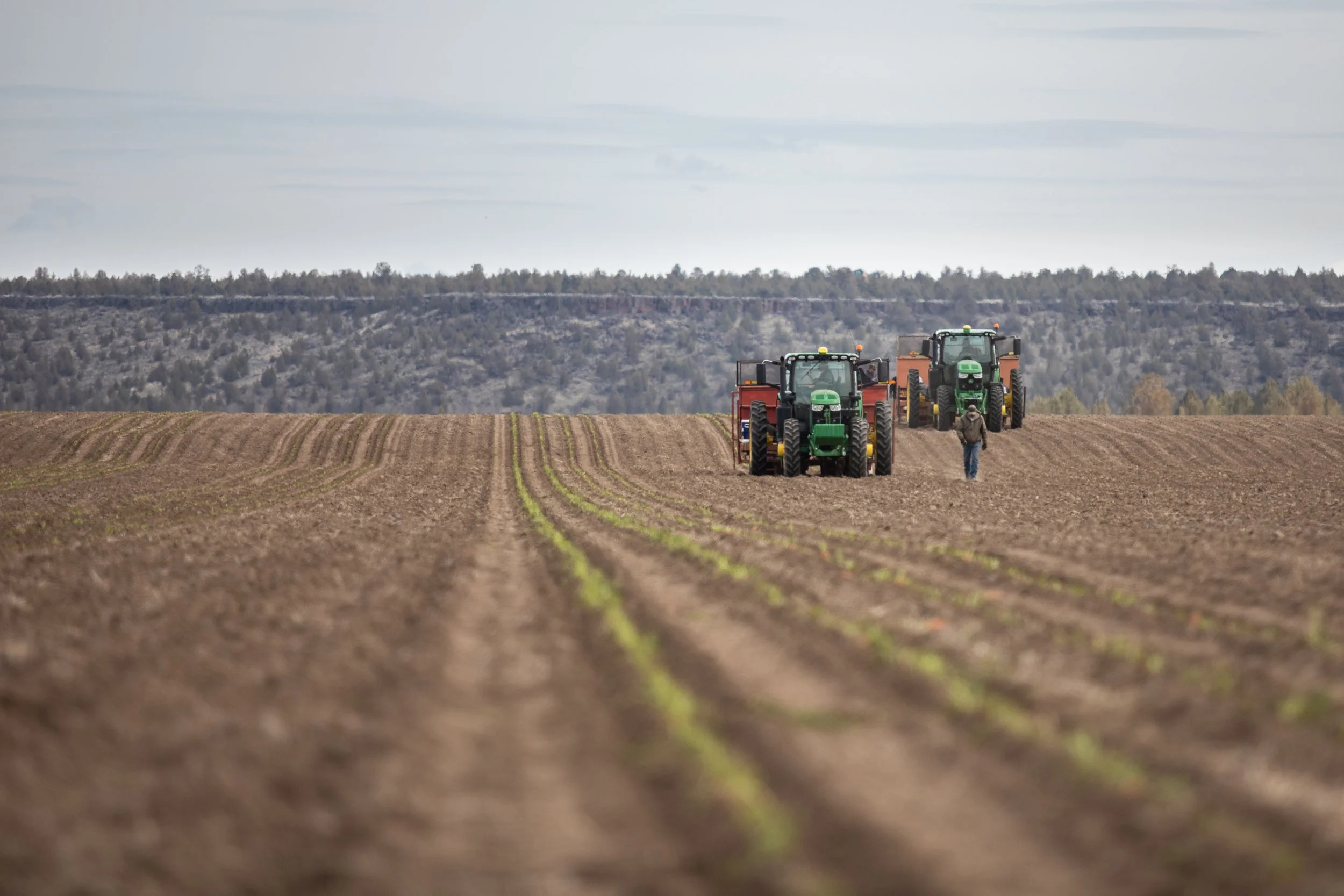
Farmers and ranchers consistently tell us that the conversion of farmland to other uses is among their top challenges. Photo: Ryder Redfield.
Central Oregon is facing a critical question about the future we want for our rural lands: one rooted in stewardship and sustainability, or one driven by short-term private gain.
Thanks to your support, LandWatch spent 2025 pursuing a goal larger than any single parcel of land—although we preserved plenty of acreage from speculative development along the way. Along with opposing proposals that aimed to convert tracts of exclusive farm use land to other uses, we took a variety of proactive actions to uphold Oregon’s land use system.
Together, we’re drawing a clear line: Deschutes County must stop paving over farmlands for luxury sprawl.
A Legal Challenge Decades in the Making
On July 29, 2025, LandWatch, alongside 1000 Friends of Oregon, sent the County a notice of intent to seek enforcement unless it ceases its practice of “spot zoning” farm and forest lands for gated subdivisions.
“Spot zoning” defined: when a single parcel of land is rezoned for a different use than the surrounding properties, often with a negative impact on the neighborhood. It is considered "spot zoning" when the change is inconsistent with the larger community's master plan and is seen as an arbitrary or unjustified benefit to one property owner, particularly if it harms neighboring properties or the public interest.
Over the past 15 years, nearly 3,000 acres of farmland have been rezoned in this way for high-end housing and industrial development—with hundreds more currently under review.
Each of these spot zoning decisions converts land that could be used to grow food or timber, puts water resources at risk, and uses taxpayer dollars to subsidize sprawl. That’s why we’re taking bold legal action to force Deschutes County to comply with the law and protect Central Oregon’s irreplaceable agricultural lands, forests, wildlife, water, and quality of life for all.
In late September, the County responded to our request by saying that it has no plans to curtail its rampant approval of spot zonings. Now, with our partners at 1000 Friends of Oregon, we plan to formally petition Oregon’s Land Conservation and Development Commission (LCDC) to take enforcement action against the County for violating the statewide land use goals that require counties to preserve agricultural and forest lands and direct growth into cities rather than across rural lands.
The fate of Central Oregon’s rural lands has been precarious for decades—and we’re stepping up to chart a more sustainable future for Deschutes County’s rural lands: one that doesn’t include more luxury subdivisions strewn scattershot across our farmlands, forests, open spaces, and wildlife habitat.
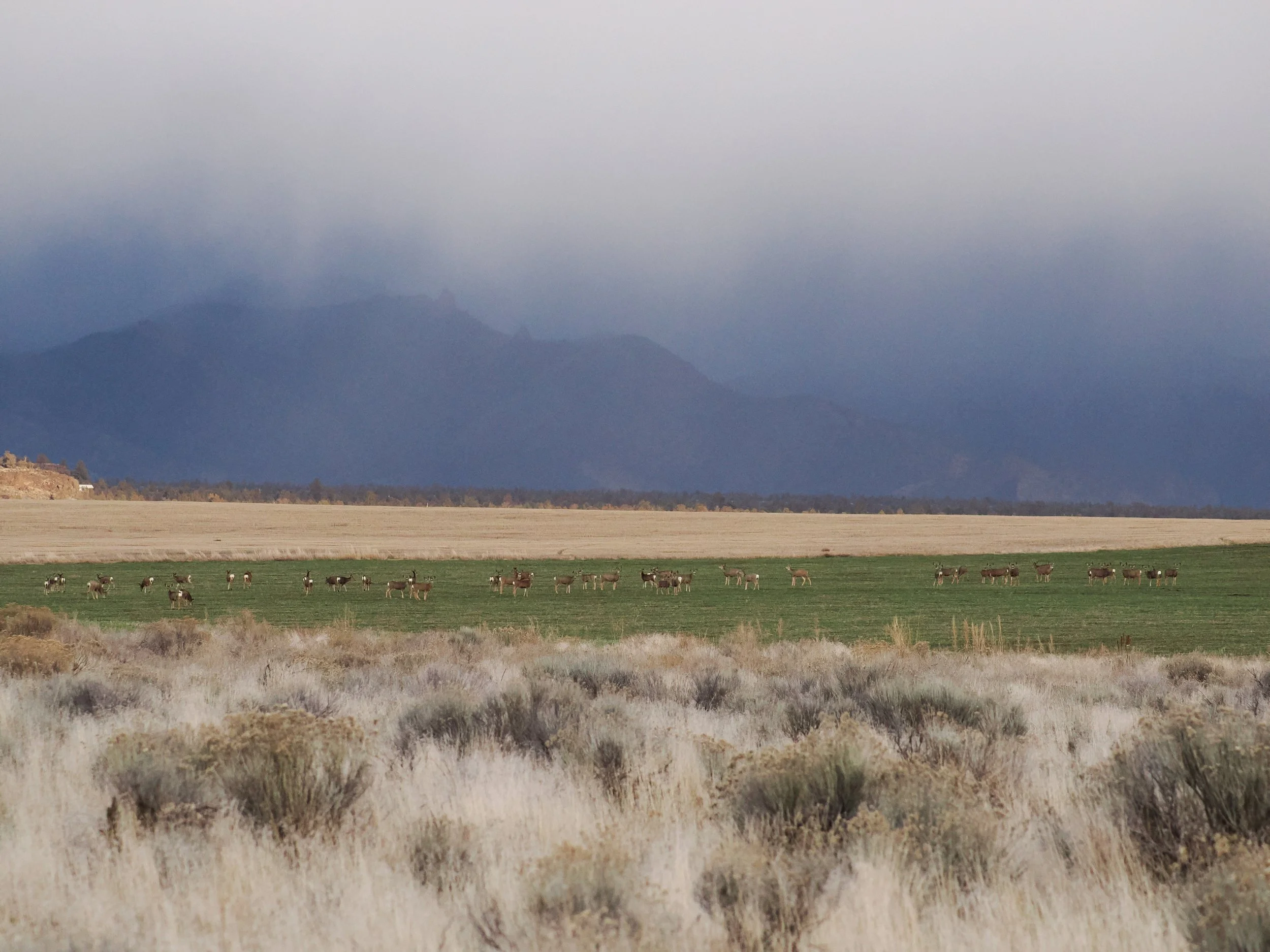
Regional mule deer populations rely on intact open space across our rural lands. Photo: Ryder Redfield.
We Need Farmland and Housing. We Can Have Both.
Central Oregon’s rural lands are the backbone of our local food system, rural economies, and high desert identity. Hundreds of farms and ranches supply our region’s farmers markets, restaurants, and food banks with locally grown produce as well as beef and dairy products. Agriculture and forestry contribute hundreds of millions of dollars annually to Deschutes, Crook, and Jefferson counties’ economies, sustaining rural livelihoods across the region. Harder to define, but no less important, is the way that open landscapes, sagebrush steppe, and working ranches contribute to our sense of place.
While critics of holistic land use planning like to claim Oregon’s land use system is too cumbersome and suggest rezoning farmland will solve housing shortages, the reality is that our land use system is a framework for creating housing responsibly. Our cities and towns have urban growth boundaries specifically so we can plan for housing in locations where infrastructure and services already exist.
Breaking large tracts of open farmland and rangeland into 5- or 10-acre lots for luxury homes does not create the housing we need. Further, with more than 2,900 vacant rural residential lots already, there’s simply no reason for Deschutes County to allow our farmland to be paved over.
Advocating for a Better Comprehensive Plan
This fall, the Deschutes County Board of Commissioners approved a new Comprehensive Plan. LandWatch previously appealed an earlier version of the plan for allowing too much development on farm and forest lands. Rather than defend that plan, the County withdrew it for reconsideration—an early sign our advocacy is working.
While their revised plan includes some new language, it still falls short of the state land use goals that protect our high quality of life and keep Oregon, Oregon. In October, LandWatch appealed the plan again, continuing our efforts to ensure that the County’s blueprint for growth doesn’t jeopardize wildlife habitat, groundwater, forests, or farmland.
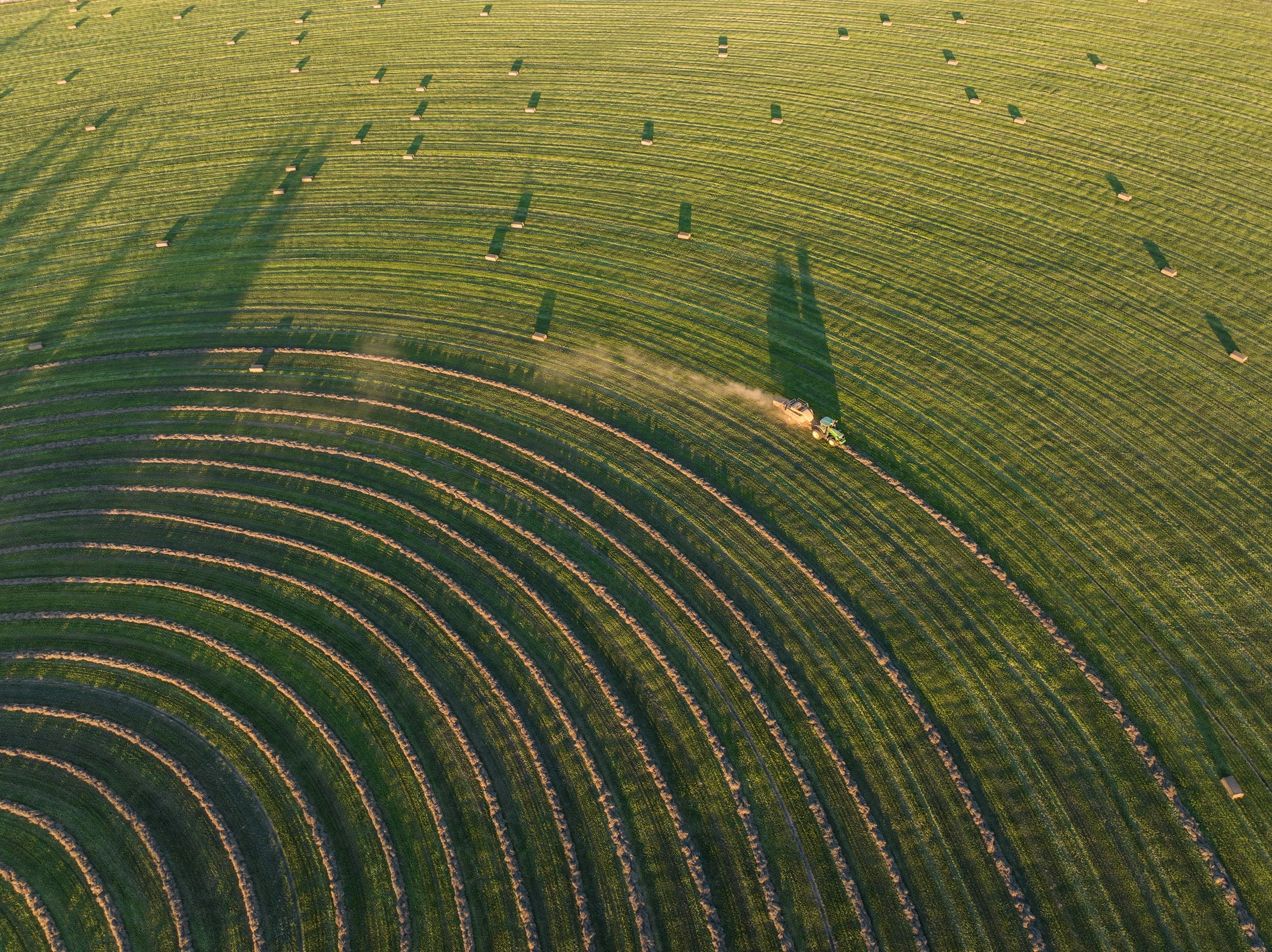
Photo: Ryder Redfield.
The Power of Community Commitment
Farmers and ranchers deserve affordable access to the land they need to grow food for our communities. Central Oregonians deserve to know their tax dollars aren’t subsidizing luxury sprawl. And all of us deserve to know that the working landscapes that make this place special will remain for generations to come.
Together, we are pressing Deschutes County to honor the fundamental promise of Oregon's land use system and protect family farms, clean water, critical wildlife habitat, and the landscapes that define Central Oregon. Thank you for standing with us—and for proving that lasting change comes from playing the long game.