
Rooting for Junipers
In appreciation of their shade, resilience, and more
With their twisting trunks, evergreen sprays, and signature clusters of berries, juniper are a deeply interwoven symbol of life in Bend. And yet, right now, their future in our city’s urban forest is being debated.
Bend residents have an opportunity — before March 11 — to submit comments on the continued implementation of the city’s tree code priorities and regulations, as developed by the Tree Regulation Update Advisory Committee, and unanimously approved by City Council. The City’s tree code is designed to preserve and expand Bend’s urban forest as we grow. One species, however, has been called into question: the western juniper.
As The Bulletin reported last year, some homebuilders have asked the city to remove junipers from Bend’s protected tree list, arguing they are less desirable in urban settings and more appropriate for removal in the name of ecological restoration (see “Homebuilders ask Bend to remove junipers from city’s protected tree list,” Oct. 29, 2025).
It is true that, regionally, juniper removal can be an effective conservation strategy. Maybe you’ve even participated in a juniper cutting trip, as I have. Across parts of Eastern Oregon, cutting encroaching junipers in a targeted way can help restore sagebrush habitat critical to the greater sage-grouse and revive sensitive riparian areas. But that native habitat restoration work in remote rangelands is hardly an applicable parallel to urban neighborhoods slated for development. The ecological context — and the goals — are entirely different.
In an urban setting, junipers contribute the same essential benefits as any other tree: shade and cooling, better air quality, carbon storage, stormwater management, and soil stabilization.
Beyond the many public health benefits they provide to people, these gnarled conifers also provide excellent habitat for local wildlife, offering food, nesting and roosting sites, and shelter. Cavity-nesting birds, like Northern flickers and American kestrels, would be in tough shape if mature junipers were no longer protected. Junipers cast meaningful shade in a warming climate — not only for people and pets, but for birds, small mammals, and our resident mule deer, too.
Tell the Bend City Council to keep juniper protected by the tree code.
A versatile species
Junipers do well in Central Oregon’s tough conditions — dry summers, cold winters and nutrient-poor soils. Climate models from the U.S. Forest Service suggest that, over the next several decades, increased heat and drought may lead to declines in many forest ecosystems. The versatility that helps juniper thrive now will be important as Oregon experiences more disturbance from human activity, higher intensity, and more frequent drought. In many cities, planners are scrambling to identify and plant climate-resilient species. Here in Bend, we are lucky to already have a native species well suited to the future we face.
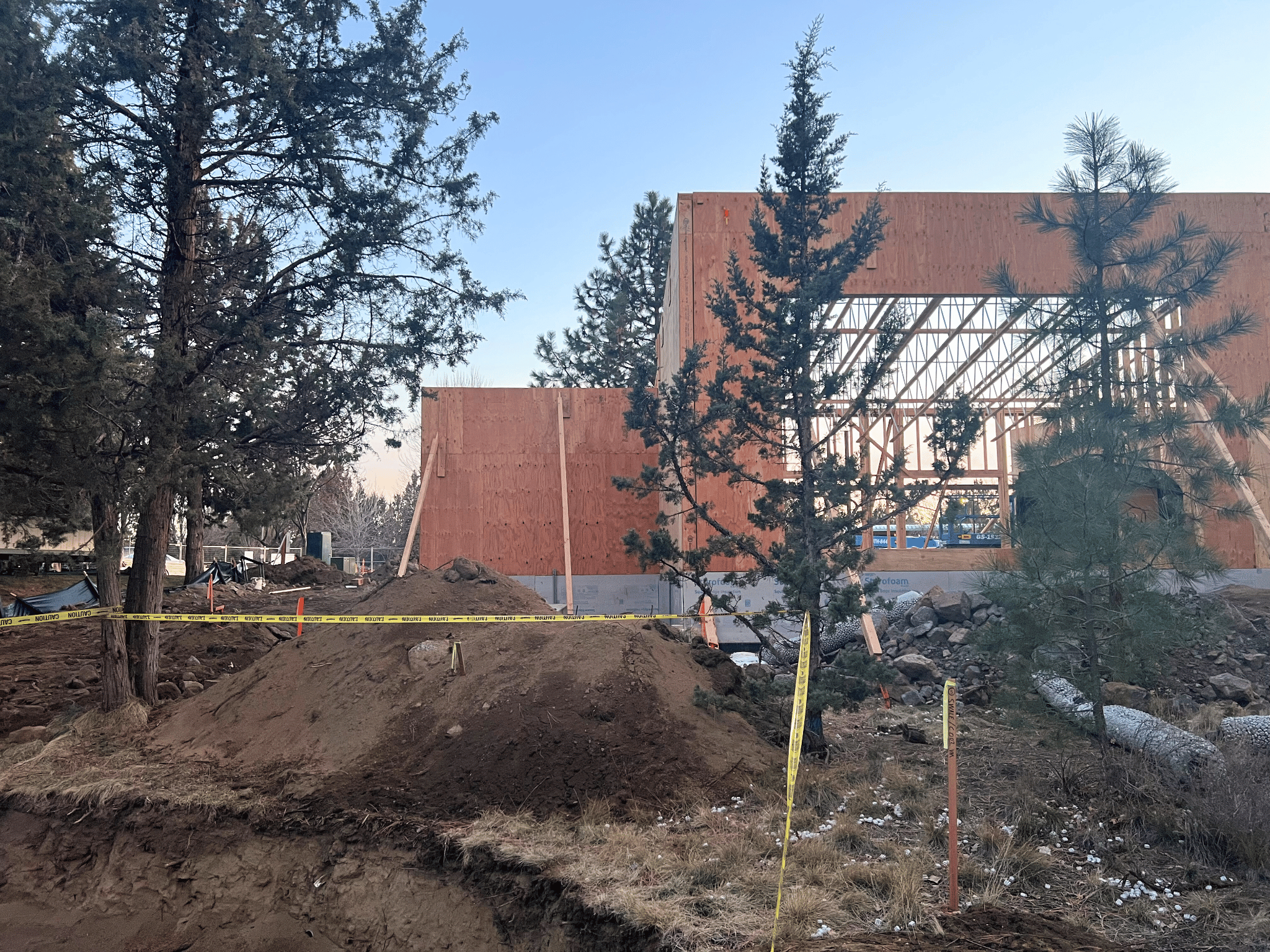
Bend can balance construction with juniper preservation.
Junipers will take advantage of water when it is available, but they can also go for extended periods without any at all. As they do not require regular watering to survive, they support the city’s water conservation goals more effectively than many non-native ornamentals that demand irrigation throughout the summer.
Removing junipers from the tree code — or reducing their level of protection — also raises significant equity concerns. Bend’s west side is characterized largely by ponderosa pine, while the east side, where much of Bend’s future growth is expected, is defined by juniper steppe.
If the tree code places greater value on ponderosas while diminishing protections for junipers, it risks being far less beneficial to a large portion of the community. All areas of Bend deserve a healthy and resilient urban forest that incorporates native species, including mature junipers, as the city continues to densify. Ecological differences should not translate into disparities in canopy, shade, and neighborhood livability.
A recent Bend Bulletin editorial, (“Editorial: Should Bend’s tree ordinance protect junipers?” Feb. 23, 2026.), closed by asking: “Should they get the same protection as other trees? Or not?”
Join us in Rooting for Juniper
As our climate changes, resilience matters. As our city grows, equity matters. In this high desert scenario, protecting our juniper trees helps us achieve both.
We’re encouraging the City of Bend to continue including junipers as both a regulated and priority tree under the updated code. Protecting junipers will not impede thoughtful development, or the production of needed housing. It simply asks that we recognize the full value of a native species that has defined this landscape long before our subdivisions did.