
Planning for a fire-resilient future
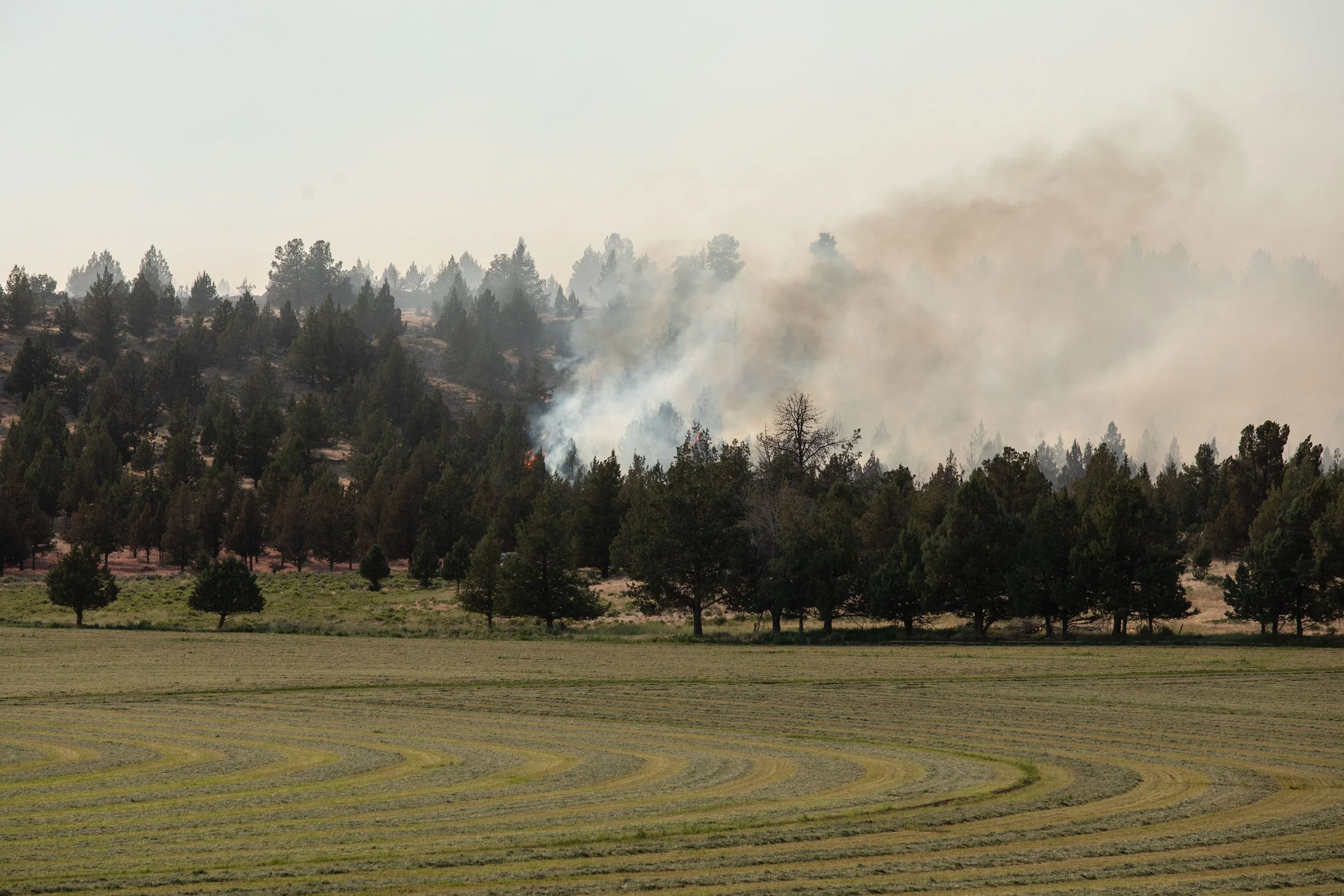
Agricultural land can serve as a buffer between our built communities and wildfire. Photo: Ryder Redfield
Wildfire has always been part of Central Oregon.
Our regional forests evolved with fire, and when it’s allowed to play its natural role, it helps maintain healthy, resilient ecosystems.
But in today’s world of increasing heat and drought due to climate change—and a growing development footprint in fire-prone areas—the risks we face are also increasing.
This reality underlines a core LandWatch principle: How and where we grow matters.
Land use planning is one of the most powerful—and often overlooked—tools we have to reduce wildfire risk over time.
Recent policy updates shaping Central Oregon
Over the past few years, we’ve seen a shift toward more practical, locally-driven wildfire resilience policies.
STATEWIDE
The 2026 legislative short session saw the passage of SB 1551. This bill advances coordination and investment in wildfire mitigation, response, and recovery, removes barriers to home hardening, and reinforces the role that individual and community action plays in reducing risk.
The state has also advanced Oregon Residential Specialty Code (ORSC) Section R327, which allows local governments a streamlined and uniform option for requiring fire-resistant construction for new homes.
It is also worth noting that, after the contentious release of statewide wildfire hazard maps prompted by 2021’s SB 762, the Oregon Legislature ultimately repealed those maps during the 2025 legislative session via SB 83. As a result, Oregon currently lacks an official statewide wildfire hazard assessment tool.
REGIONAL
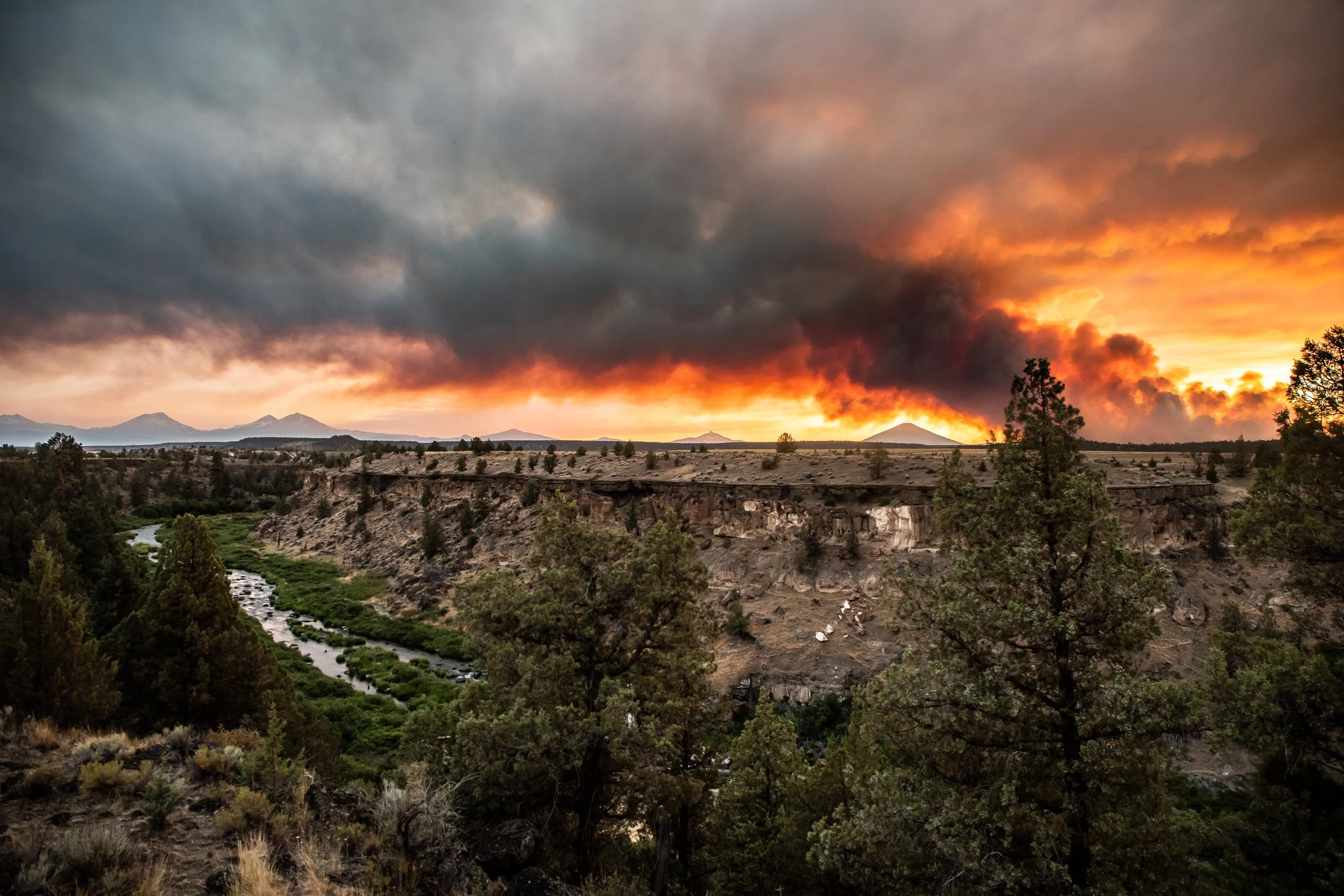
Smoke rises from a fire in Deschutes County. Photo: Ryder Redfield
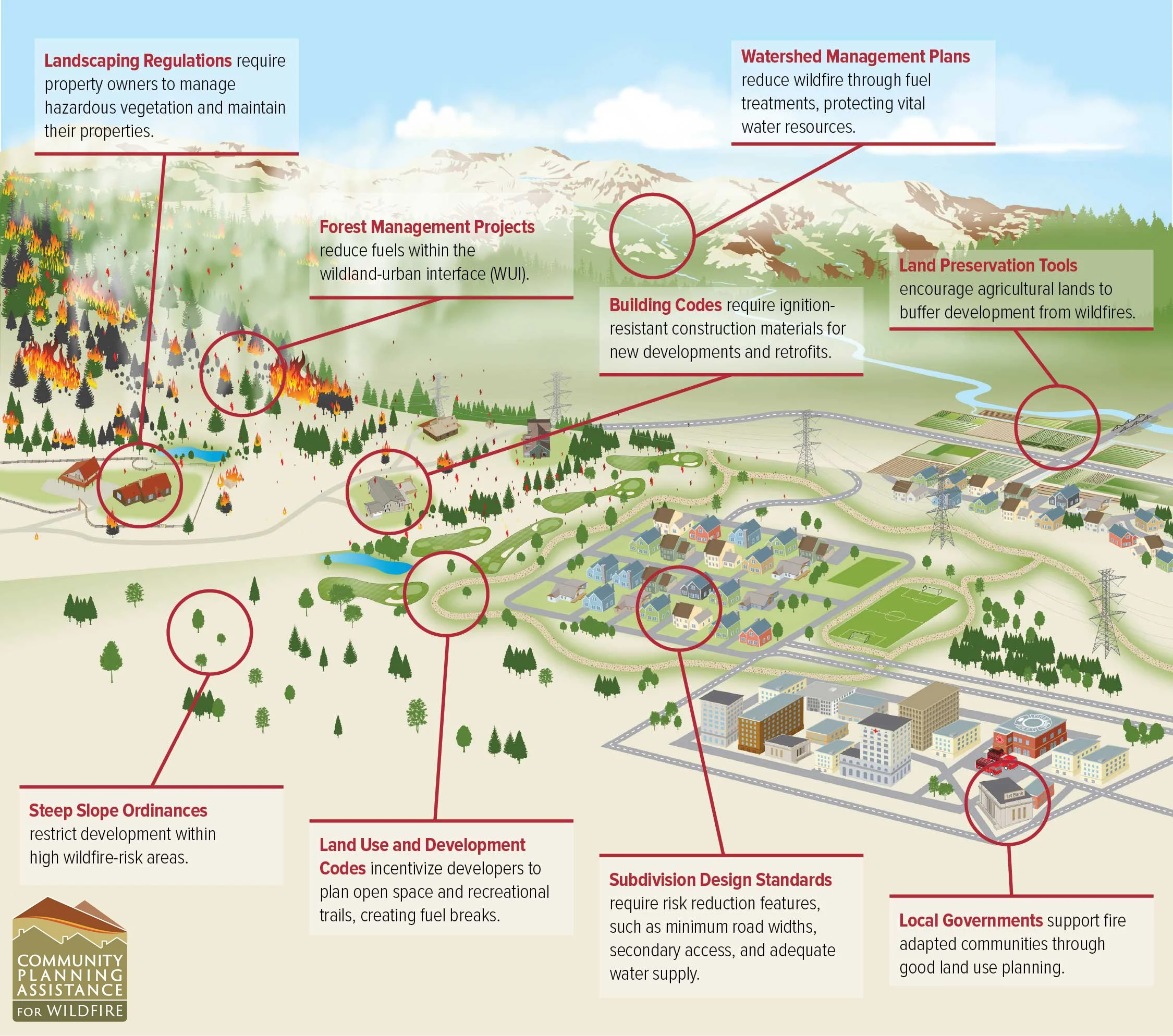
Here in Central Oregon, our local governments have continued to update Community Wildfire Protection Plans (CWPPs), refine defensible space standards, and consider how land use decisions influence wildfire risk—recognizing that how we build as our communities grow directly affects fire risk and outcomes.
Deschutes County and the City of Sisters have both become some of the earliest adopters in the state of the R327 building standards, making home hardening mandatory for new home construction.
The City of Bend has also recently adopted R327, which will apply to new home construction across the city. Next steps include crafting defensible space policies and incentives.
Crook County formally adopted an updated CWPP in February 2025.
Jefferson and Crook counties are also beginning to explore adoption of the R327 code, as well as defensible space, emergency access, and the risks to rural residential areas.
At the same time, fire risk is showing up in new ways—especially through the insurance market. Across Central Oregon, property owners are seeing rising premiums, stricter requirements, or even loss of coverage in high-risk areas. These pressures are a clear signal: fire risk isn’t just environmental—it’s economic, and it’s already shaping where and how people can live.
Together, these changes reflect a broader shift toward aligning where we grow, how we build, and how we plan for long-term resilience as a fire-adapted region.
Land use planning in action

A fire burns beyond rural residences in Deschutes County. Photo: James Parsons
Building wildfire resilient communities is integral to LandWatch’s work.
Our Wild Lands & Waters Program advocates for forest management practices that balance achieving more natural fire patterns across the landscape with protections for wildlife habitat, water quality, and communities.
Our Rural Lands Program focuses on limiting sprawling rural development in high-risk wildfire areas and the long-term costs and risks that come with it. For example, LandWatch recently prevailed at the Oregon Court of Appeals after challenging a Jefferson County approval of a 142-acre expansion of the Crooked River Ranch community. LandWatch’s work was rooted in concern about water availability, rangeland protection, and increased threat from wildfire. These concerns were validated last summer, when the Alder Springs fire led to a chaotic evacuation of Crooked River Ranch, straining the community’s limited evacuation routes.
Our Cities & Towns Program works to promote new growth and development within our existing communities in ways that are compact, connected, and safer from wildfire—paired with infrastructure and design that support resilience. Well-designed urban areas are inherently safer from fire due to closer proximity to emergency services and faster response times.
At the state level, our team has been hard at work advocating for legislative solutions to fund community resilience hubs, invest in mitigation, response, and recovery frameworks like SB 1551, and expand rigorous, science-based approaches to analyzing wildfire risks to communities.
Across all of our work, we aim to ensure that today’s land use decisions don’t create tomorrow’s wildfire disasters.
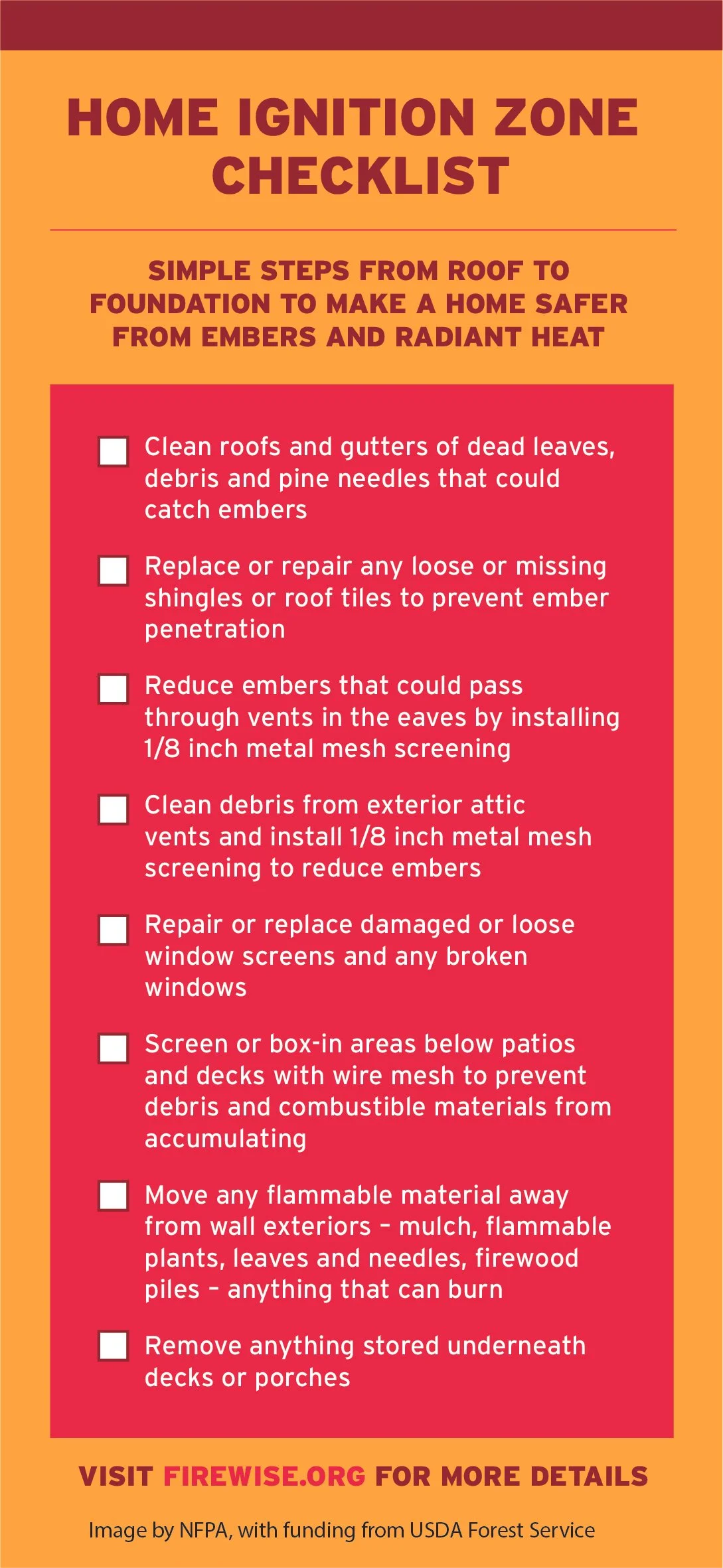
5 ways you can become more fire-resilient
Wildfire resilience also starts at home and in our neighborhoods. Small, consistent actions can make a difference:
Prepare an evacuation plan, prepare a go-bag, and sign up for local alertsfrom Central Oregon Fire Info.
Prepare for smoke. Make sure you have an air filter for your home and sufficient back up filters. Avoid exercising outside, and wear a mask if you have to spend time outdoors.
Connect with neighbors. Community-wide preparedness is a key part of building resilience.
If you’re a homeowner, you have options for improving your property’s fire resilience:
Maintain defensible space by reducing flammable vegetation and materials in the 5’ around your home.
Choose fire-resistant materials when making building upgrades.
Fire resilient communities are built piece by piece
While fire is a natural part of life in Central Oregon, it can feel overwhelming.
Thankfully, smart policy, thoughtful planning, responsible growth, and collective action can help us live with fire in ways that are safer, more resilient, and grounded in the high desert landscapes we call home.
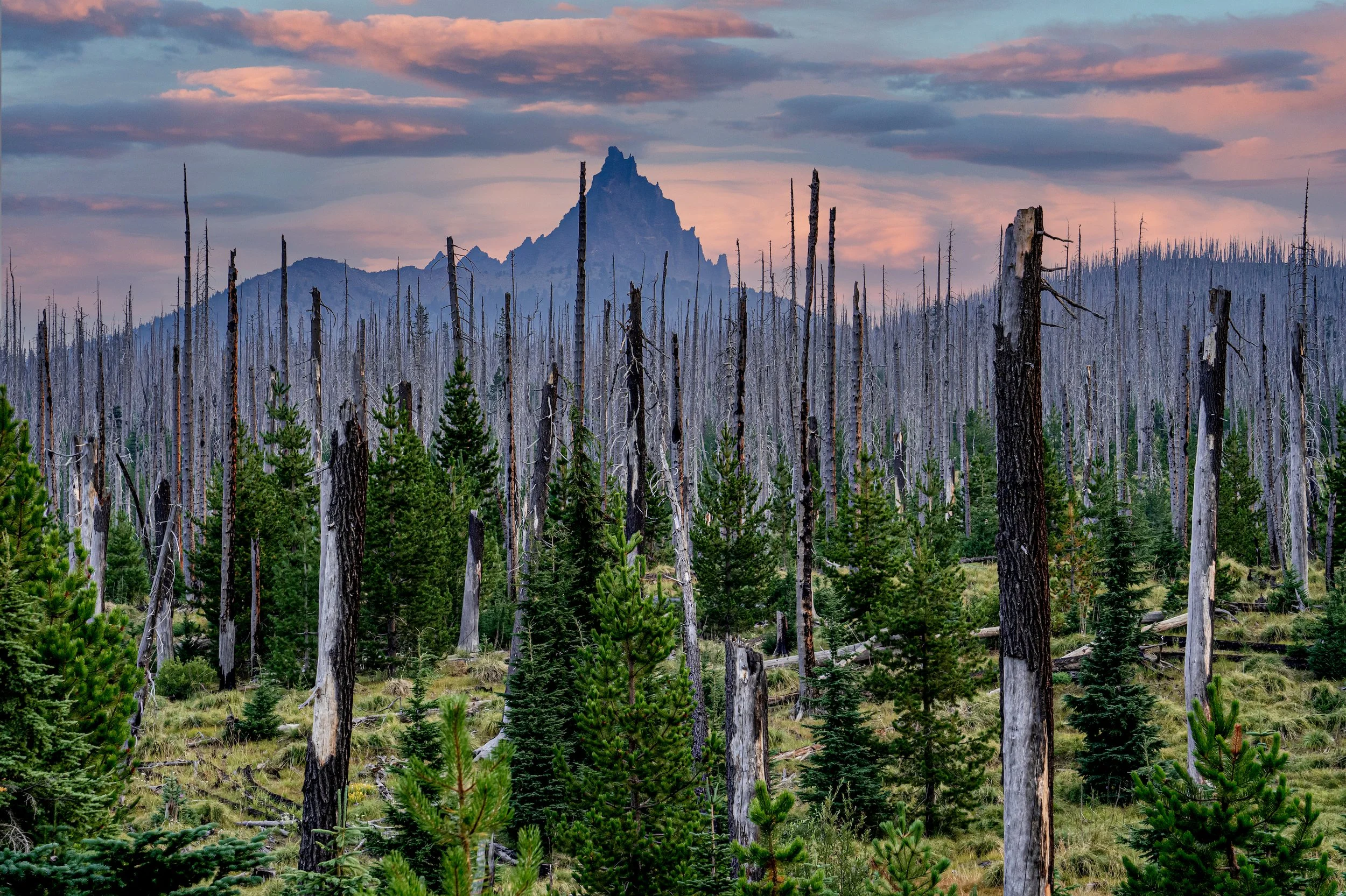
New growth emerging from a high elevation burn in the Deschutes National Forest near Three Fingered Jack. Photo: Shutterstock / Bob Pool