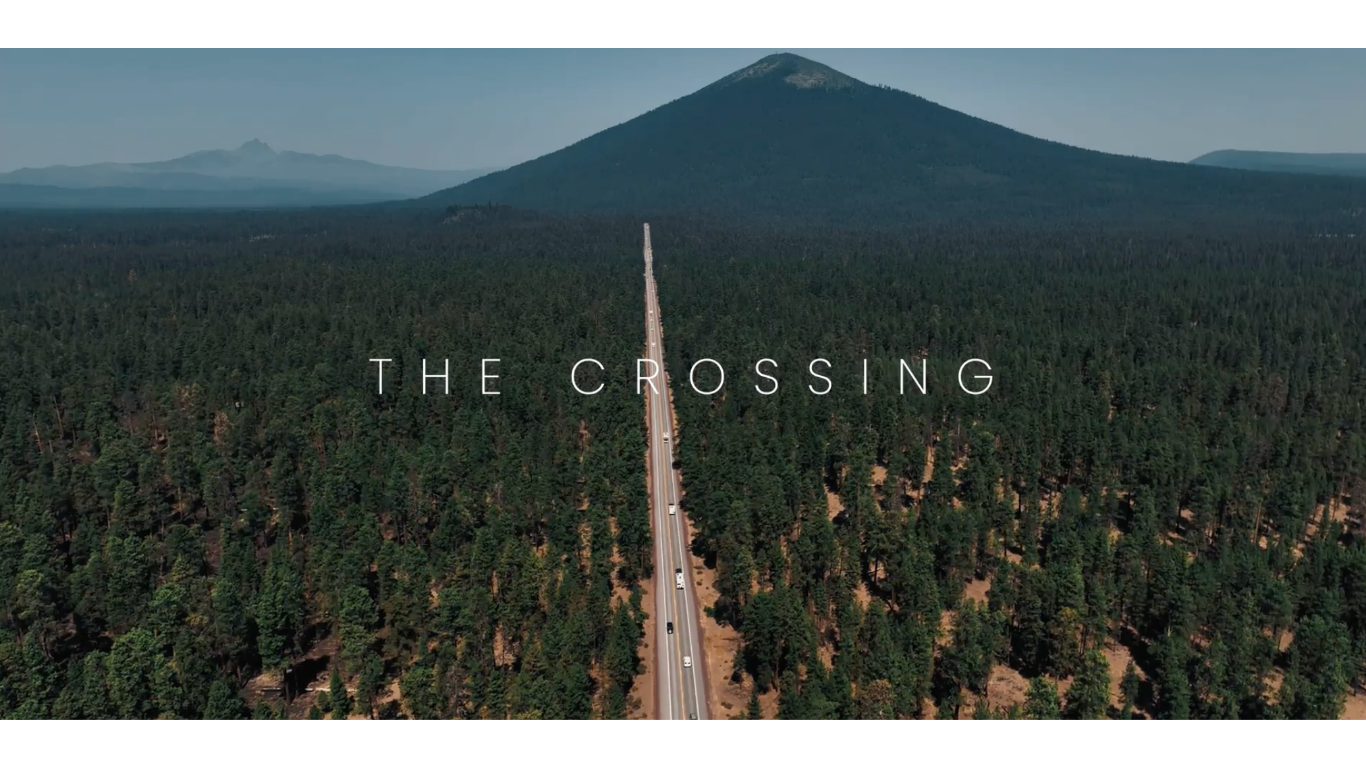
Wildlife Crossings in Action
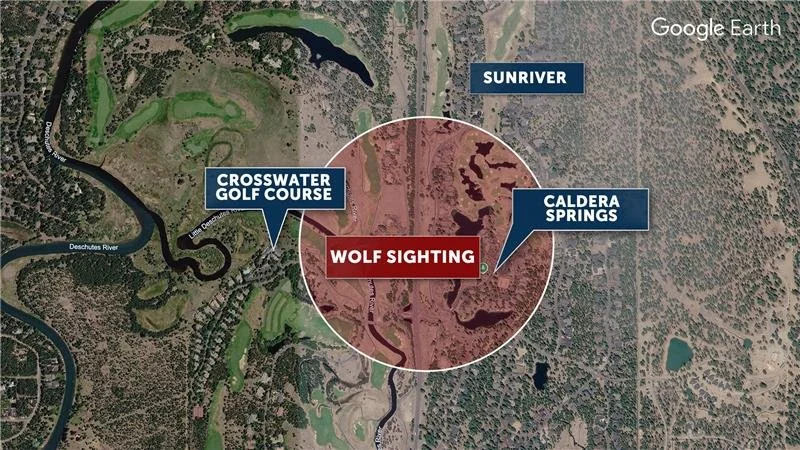
Location of a recent wolf sighting near Sunriver. Map: KTVZ
Recently, the Central Oregon community caught a glimpse of an elusive lupine species along a popular public path near Sunriver. Not the well-known wildflower, mind you—but rather, a lone wolf (i.e. Canis lupus) belonging to the Upper Deschutes Pack.
Fun fact: According to Merriam-Webster, Lupine (the flower) was once thought to drain (or “wolf”) the soil of its nutrients—hence the name.
What was this conspicuous canine doing in such a peculiar place? And how did it make its way into the center of one of our developed south Deschutes County communities?
Our Local Wolves
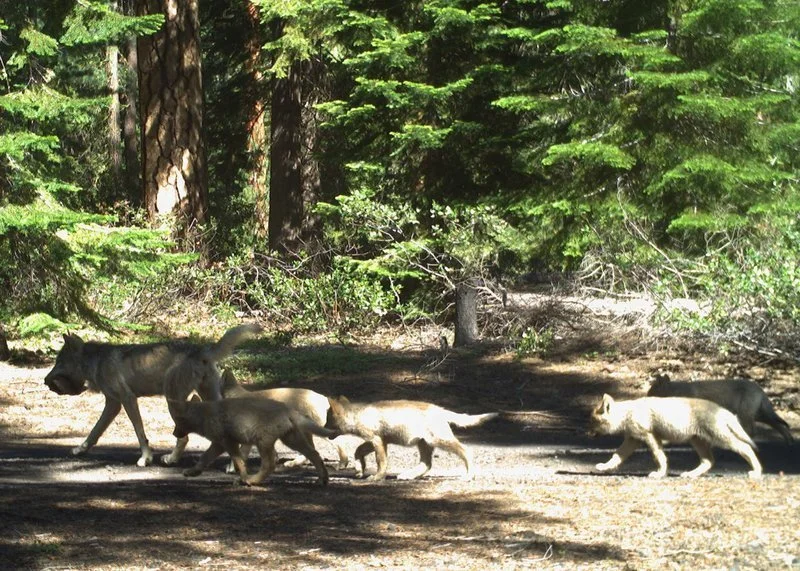
The burgeoning Upper Deschutes wolf pack captured by a trail camera in July 2022. Photo: ODFW
The Upper Deschutes pack was established about four years ago and splits its time between southern Deschutes and northern Klamath counties. As far as wolf packs go, this one is fairly visible—and if you’re going to see its members, it’s likely going to be in the Crane Prairie Reservoir–Wickiup Reservoir–LaPine area.
Aaron Bott, an Oregon Department of Fish and Wildlife biologist who specializes in our regional wolves, noted to KTVZ that the unseasonably low snowpack has more people spending time out and about in these wooded areas with known wolf activity, leading to increased sightings as these wolves are on the move and in search of a mate during the current breeding season.
Southern Crossings
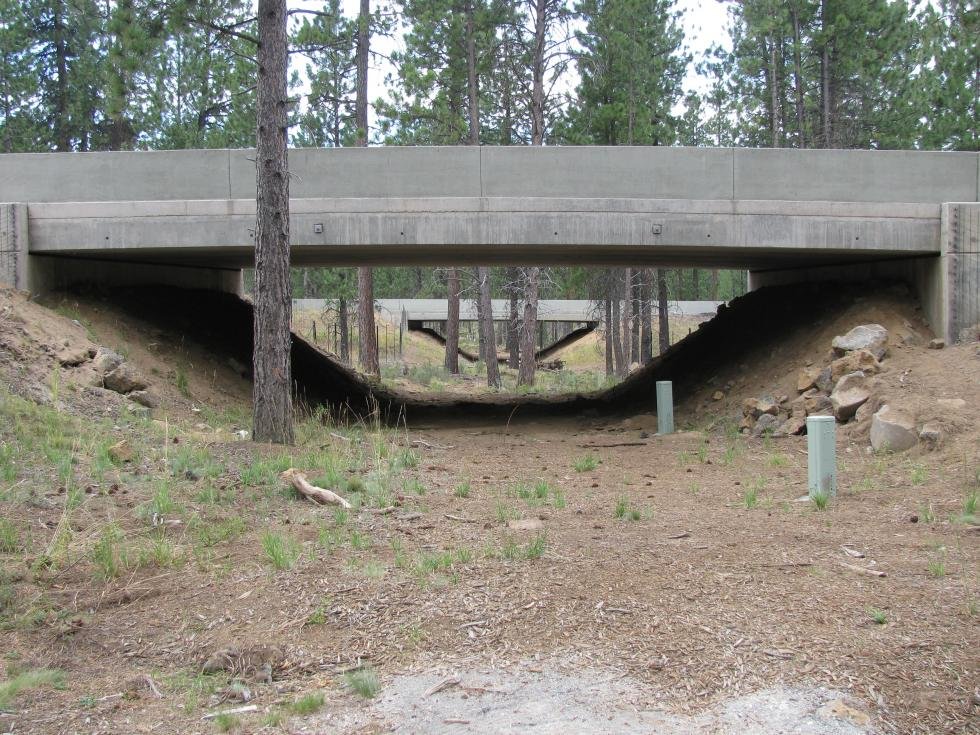
The Highway 97 wildlife undercrossings near Sunriver have significantly improved safety for drivers and habitat connectivity for a variety of local species.
Have you ever noticed the wildlife undercrossings below Highway 97 near Sunriver? Take a look as you approach mile post 154 the next time you’re passing through the area south of Lava Butte.
While we can’t be certain if this specific wolf made use of this undercrossing, we do know that the undercrossing at MP 154 and another further south at MP 180 near Gilchrist have drastically reduced wildlife-vehicle collisions and improved the ability of key species like mule deer, elk, black bear, coyotes, smaller critters, and potentially wolves to move across the significant geographic barrier of Highway 97 that prevents wildlife from moving to and from their winter and summer ranges.
For the burgeoning Upper Deschutes wolf pack, this is a crucial improvement, as elk comprise 70 to 80 percent of these wolves diets.
A LandWatch Win Bolstered Connectivity

LandWatch played a role in enabling this important wildlife connectivity corridor in the 2010s by way of our opposition to a destination resort proposed on land just south of Sunriver.
After LandWatch successfully challenged Deschutes County’s approval of the resort at the Land Use Board of Appeals and the Oregon Court of Appeals, a win-win settlement was reached. In the resulting settlement agreement, the resort agreed to create a conservation easement across a significant portion of its property to be preserved in perpetuity as a wildlife corridor to provide safe passage across the lands between the Cascades and the Highway 97 wildlife undercrossings
More Safe Passage to Come

Thanks to the Bend to Suttle Lake Wildlife Passage Initiative, four new wildlife overcrossings will soon connect this important corridor for the safety of people and wildlife alike.
As our region grows and the presence of our built human communities increasingly influence the regional landscapes that wildlife traverse, it is our responsibility to ensure our non-human neighbors have safe passage, too. Taking steps to keep habitat connected helps wildlife successfully move between the winter and summer ranges they need to sustain themselves.
LandWatch is leading the Bend to Suttle Lake Wildlife Passage Initiative to build four new wildlife overcrossings along Highway 20 near the base of Black Butte. These overcrossings will facilitate the safe passage of local mule deer, elk, and other species while also significantly improving safety for drivers along a dangerous stretch of highway, one that sees the highest density of deer and elk wildlife-vehicle collisions in the entire state.
By participating in coalitions like the Bend to Suttle Lake Wildlife Passage, promoting land use zoning protections for wildlife, and helping to create wildlife corridor conservation easements across private lands, LandWatch is working to ensure safe passage for all species of wildlife.