Go Backyard Birding

Enjoy a major benefit of keeping nature nearby, and take part in community science while you’re there
By Lace Thornberg, Communications Director
-
But all of these sites would be acessible year-round
-
Central Oregon’s diverse landscapes invite a variety of bird species
-
Plus, hiking and animal tracking
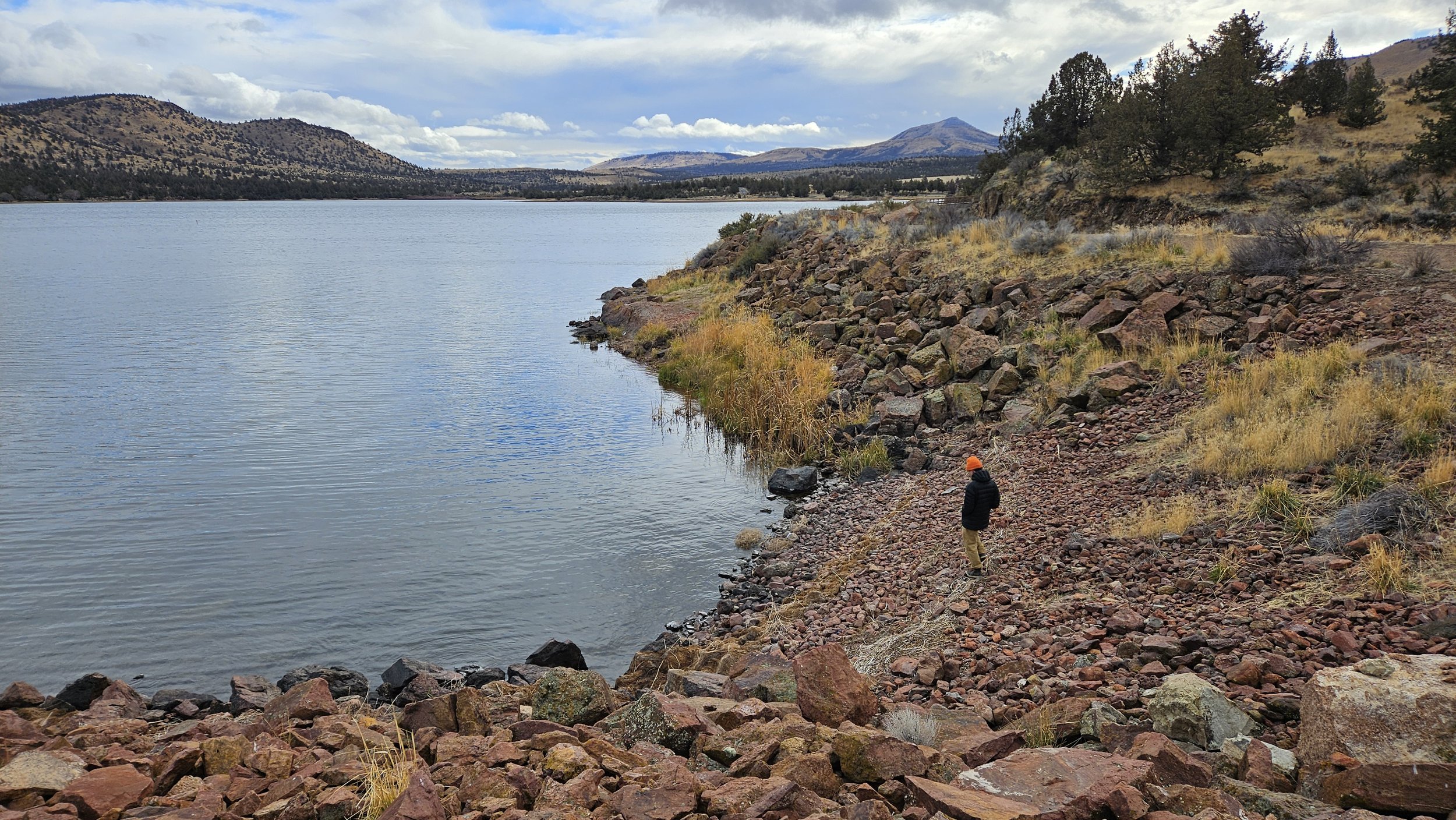
Three major ecoregions converge in Central Oregon —the Eastern Cascades, the Blue Mountains, and the Northern Basin and Range. On any given day, you could bounce between high desert sage and juniper, ponderosa-pine forests, and mountain meadows.
“This wide range of habitats draws an incredible diversity of bird species year-round and through migration cycles, from woodpeckers in open forests to sparrows in shrublands. It can make birding here rather addictive,” admits Jeremy Austin, Central Oregon LandWatch’s Wild Lands and Water Program Director.
Fortunately, there’s no reason to resist birdwatching’s siren song. As it demands slowing down, birdwatching is an incredible tool for mental health. Stepping outside with intention—standing still, breathing the cold winter air, listening for those high-pitched calls—is a powerful way to reclaim your attention in a world that pulls it away. You watch, you wait, you calm down. In these quiet moments, your thoughts can flit about and soar.
After noticing birds leads you to start intentionally seeking out birds, there’s yet another destination that many birders arrive at: keeping track of the birds you’ve seen. You might start making checkmarks next to species names in a field guide, or you might start checking off species on an app like eBird.
(If you’re an athletic person, you can think of eBird like Strava, but for birding. If you’re poetically inclined, think of eBird as Mary Oliver’s instructions for living a life—“Pay attention. Be astonished. Tell about it.”—embodied in an app.)
When you log what you see eBird, or other similar apps, your checklists become something quite important: biodiversity data. Researchers use these online data repositories to track where species are thriving and where they’re struggling. Every bird you see, or don’t see, is evidence of how climate shifts and habitat changes are reshaping the West.
One important and delightful way to participate in community science take places annually in mid-February the Great Backyard Bird Count. To participate in this free, global event, you spend 15 minutes or more, on one or more of those four days, watchching birds. Then, share your count via eBird or Merlin Bird ID.
Every little list adds resolution to the world’s largest snapshot of how birds are faring this winter.

Several Central Oregon LandWatch staff will be taking part in 2026, and we hope you’ll join us.
You can take the backyard part literally, and simply step outside and share what you see. Or, you can extend your notion of backyard and visit one or more of the natural areas we’re fortunate to have available as community resources.
Riley Ranch Nature Reserve
This ruggedly beautiful riverside habitat was preserved for both the benefit of wildlife and this community thanks to the foresight of local residents, including Toby and Michel Bayard, who were instrumental in protecting this 184-acre area from development.
Today the reserve draws scores of birders, who enjoy rambling along the Deschutes River through Ponderosa pines and high desert shrubbery. Brightly colored species like Western Bluebirds and Steller's Jays really pop amidst the subdued rimrock tones here, while other species like California Quail and Great Horned Owls can hide quite well, until they start to run or fly.
EBird: Riley Ranch Nature Reserve
Bend Parks and Recreation: Riley Ranch Nature Reserve
Note: As a nature reserve, not a standard city park, a different set of rules apply here: no bicycles, drones, or dogs (except service animals) are allowed.
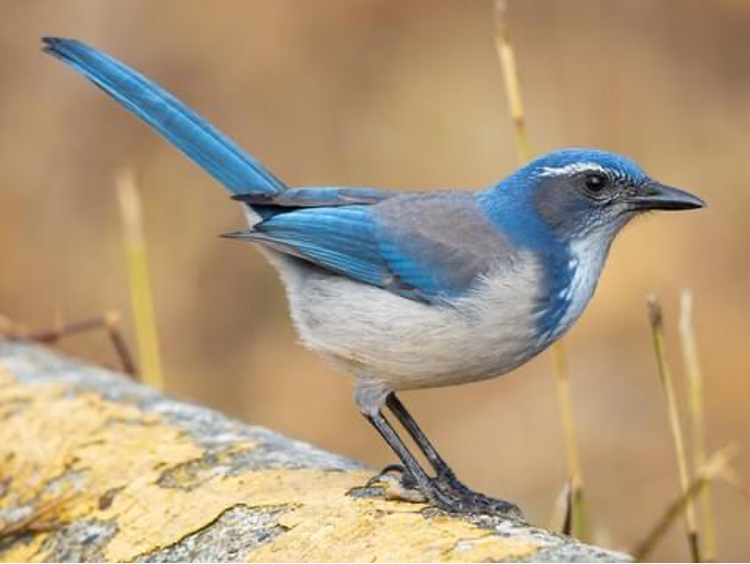
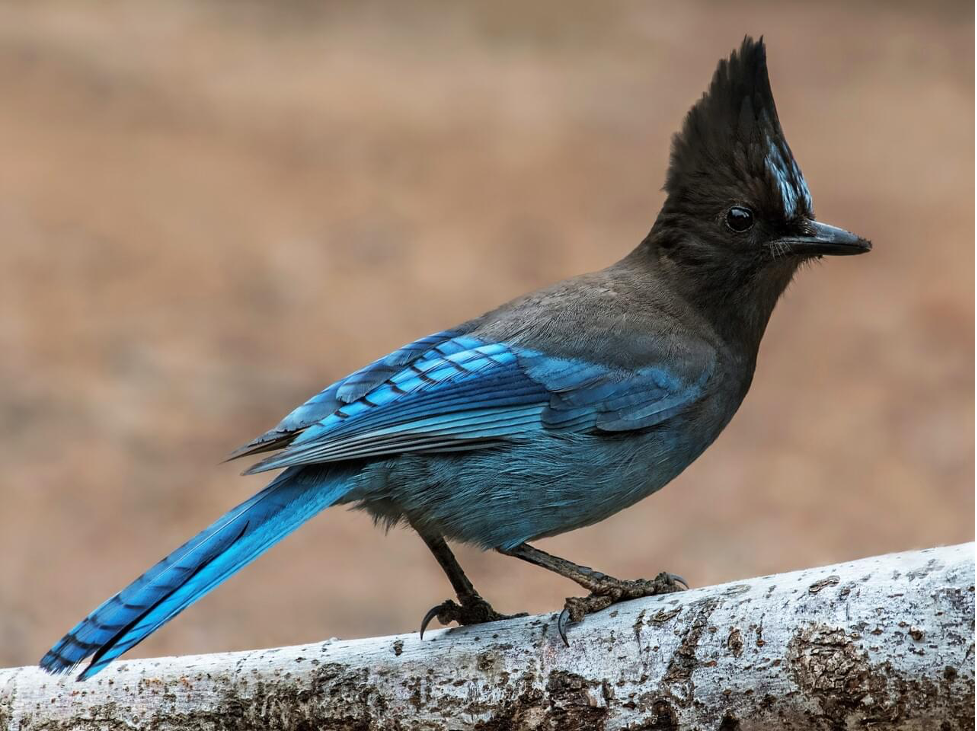
A California scrub jay (left) and a Steller’s jay (right). Both jays are commonly seen species at Riley Ranch. Photos: Cornell Labs.
Sawyer Park
This park is a popular spot on the Oregon Cascade Birding Tour route. Scan the skies for bald eagles and ospreys. Watch for Hooded Merganser, Common Merganser, Common Goldeneye American Dipper and more in the river, and look into the riverside trees and shrubs for Merlin, Anna's Hummingbird, Belted Kingfisher, Song Sparrow, Cedar Waxwing and Lesser Goldfinch. Visit regularly and you could add 140 species of birds to your life list in this park alone.
EBird: Sawyer Park
Bend Parks and Rcreation: Sawyer Park
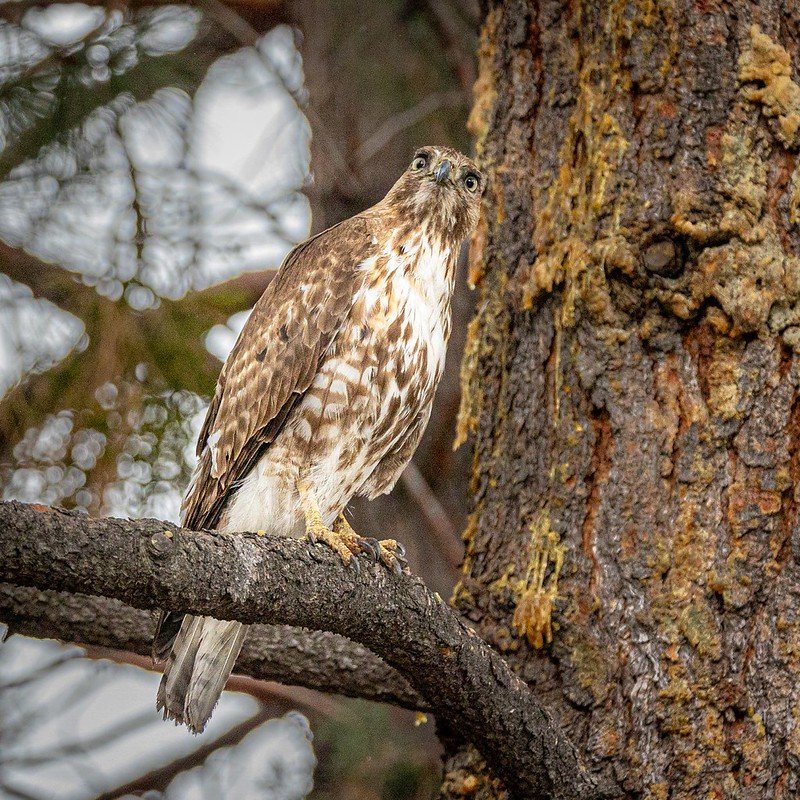
This juvenile red-tailed hawk represents one of the more than 140 bird species that live in and migrate through Sawyer Park. Photo: Robert Shea.
Mirror Pond
This oasis in Drake Park proves you don’t even have to leave the center of town to connect with wildlife, with waterfowl and songbirds all closer than a latte.
Avid Central Oregon birder Craig Miller recommends this approach for maximum variety: “It is possible to hike trails downriver to Pioneer Park and beyond, and upriver to the Old Mill District and beyond. Birds that can often be found in winter include Canada Goose, Wood Duck, Gadwall, Ring-necked Duck, Bufflehead, American Wigeon, Pied-billed Grebe, Great Blue Heron, and many others.”
EBird: Mirror Pond
Bend Parks and Recreation: Drake Park and Mirror Pond
Visiting our city’s parks and nature preserves reminds us: nature shouldn’t be “out there.” It can be right here, along the sidewalk, the trail, and the river bend.
The City of Bend has just launched into their next urban growth plan process, with a number of important decisions on the horizon. Throughout the process, Central Oregon LandWatch will be advocating for thoughtful approaches to land use that center on creating complete communities. A key element of that work will be ensuring all residents have nature nearby. If steering Bend’s growth is of particular interest to you, sign up for LandWatch alerts that will keep you extra in loop.
This beautiful bird-filled world is ours to watch, count, and care for. Whether you meant to arrive here or not, welcome to birding.