Ground Work
Bend to Suttle Lake Wildlife Passage Initiative partners prepare
By Jeremy Austin, Wild Lands & Water Program Director
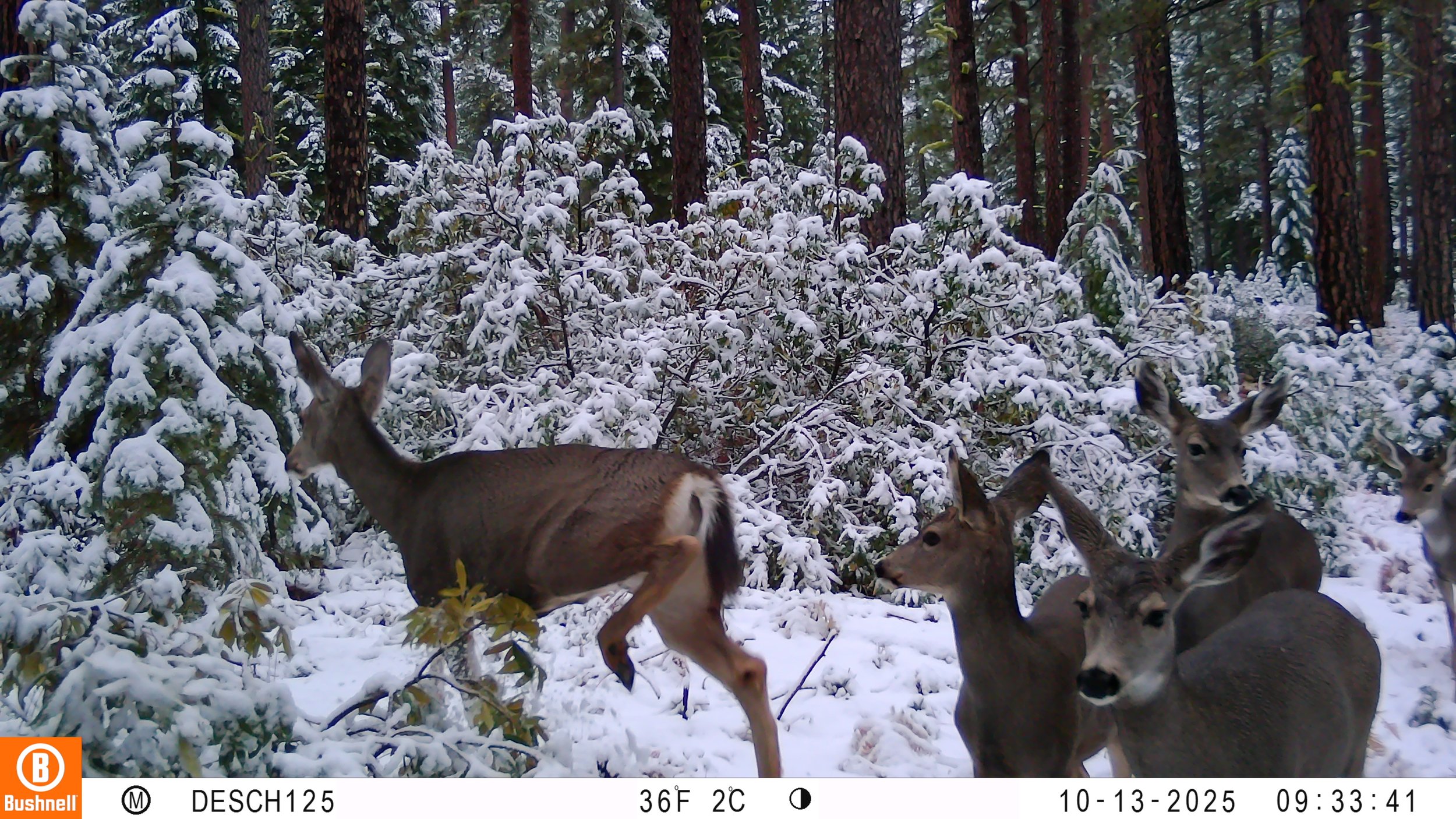
Mule deer traverse the Bend to Suttle Lake corridor, where new wildlife crossings will improve habitat connectivity for migratory animals and improve motorist safety. Photo: HERS Lab, OSU-Cascades.
In the cindery soil beneath Black Butte, a series of heart shaped imprints are faintly visible. These are the tracks of mule deer — evidence of these animals' recent migration through this area, moving down from the high Cascades and into their winter range in the Metolius River Basin.
There’s another set of tracks pressed into the ground beneath the bitterbrush here, too: the waffled-bottom of a field biologist’s hiking boots.
This past April, the Bend to Suttle Lake Wildlife Passage Coalition successfully met a $1,000,000 fundraising goal, reaching the threshold required to apply for federal matching funds for a series of much-needed wildlife crossings over Highway 20. And, with that milestone reached, the coalition partners shifted into gear on preparatory projects for the engineering and design phase of this effort.
For Oregon State University-Cascades, it meant literally putting boots on the ground, with biologists setting up dozens of motion-activated cameras to monitor the project corridor and collect important pre-construction data on wildlife use and movement through the area. In fact, the cameras have already captured deer, elk, coyotes, bobcats, and even flying squirrels.
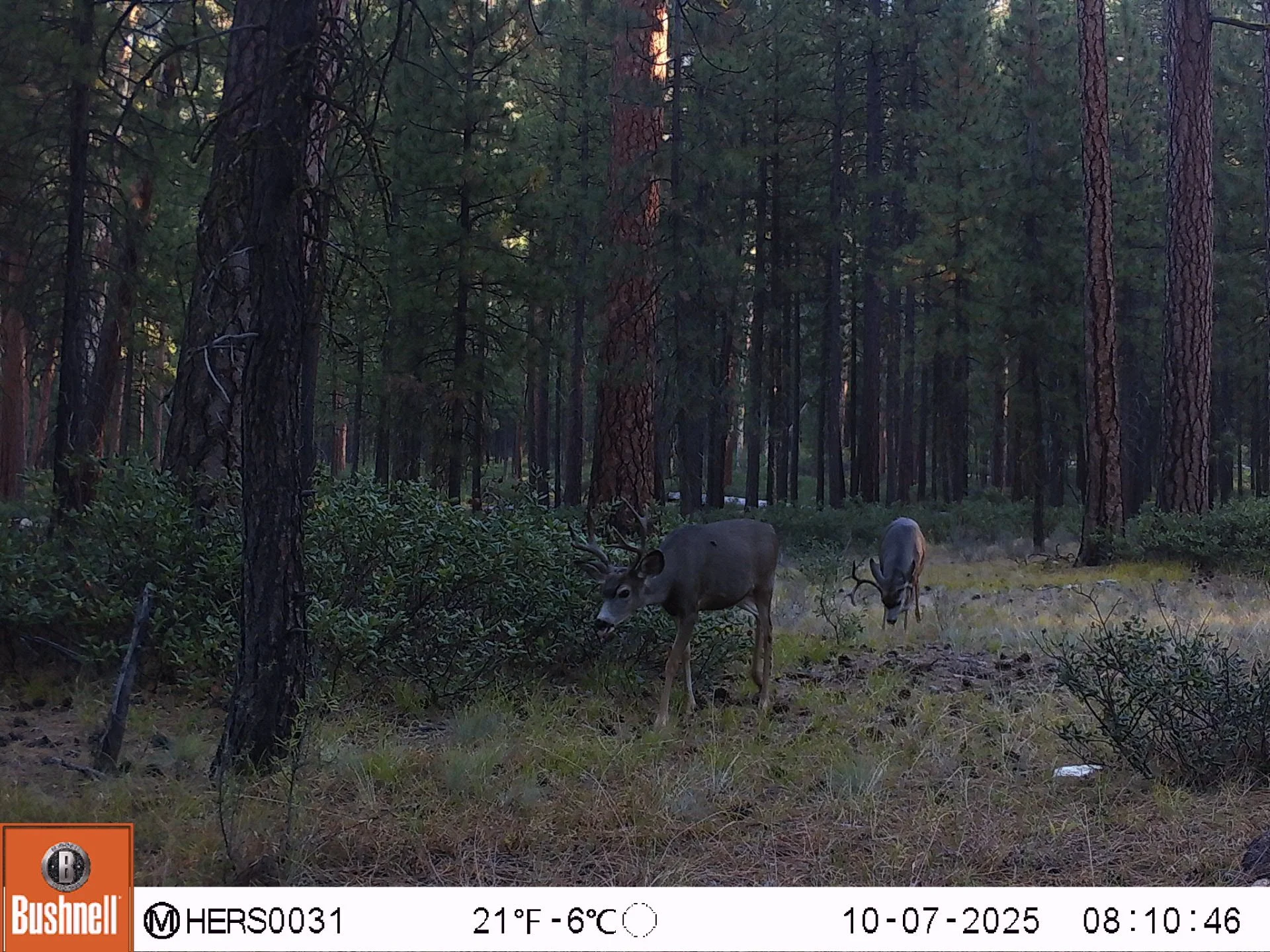
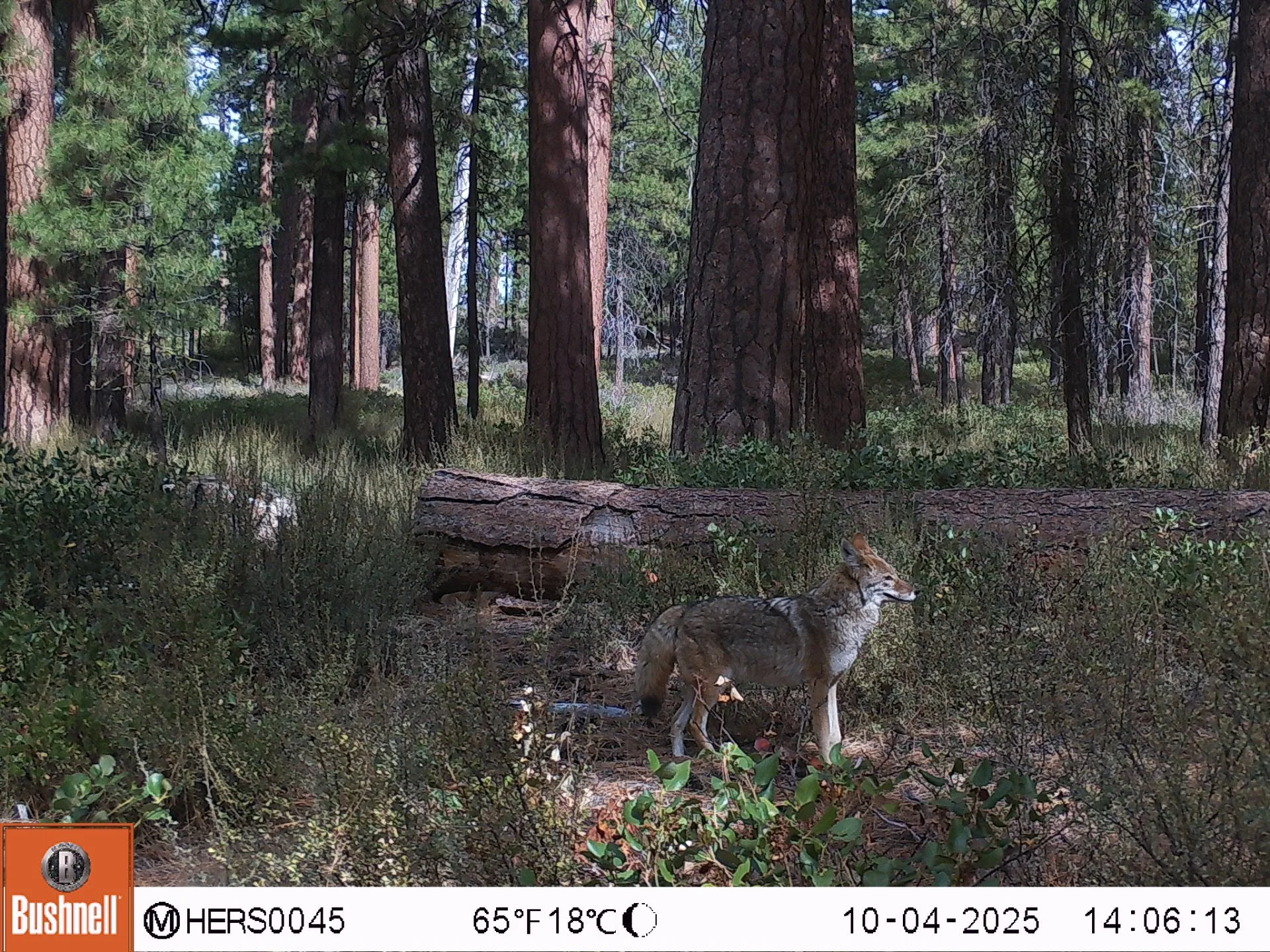
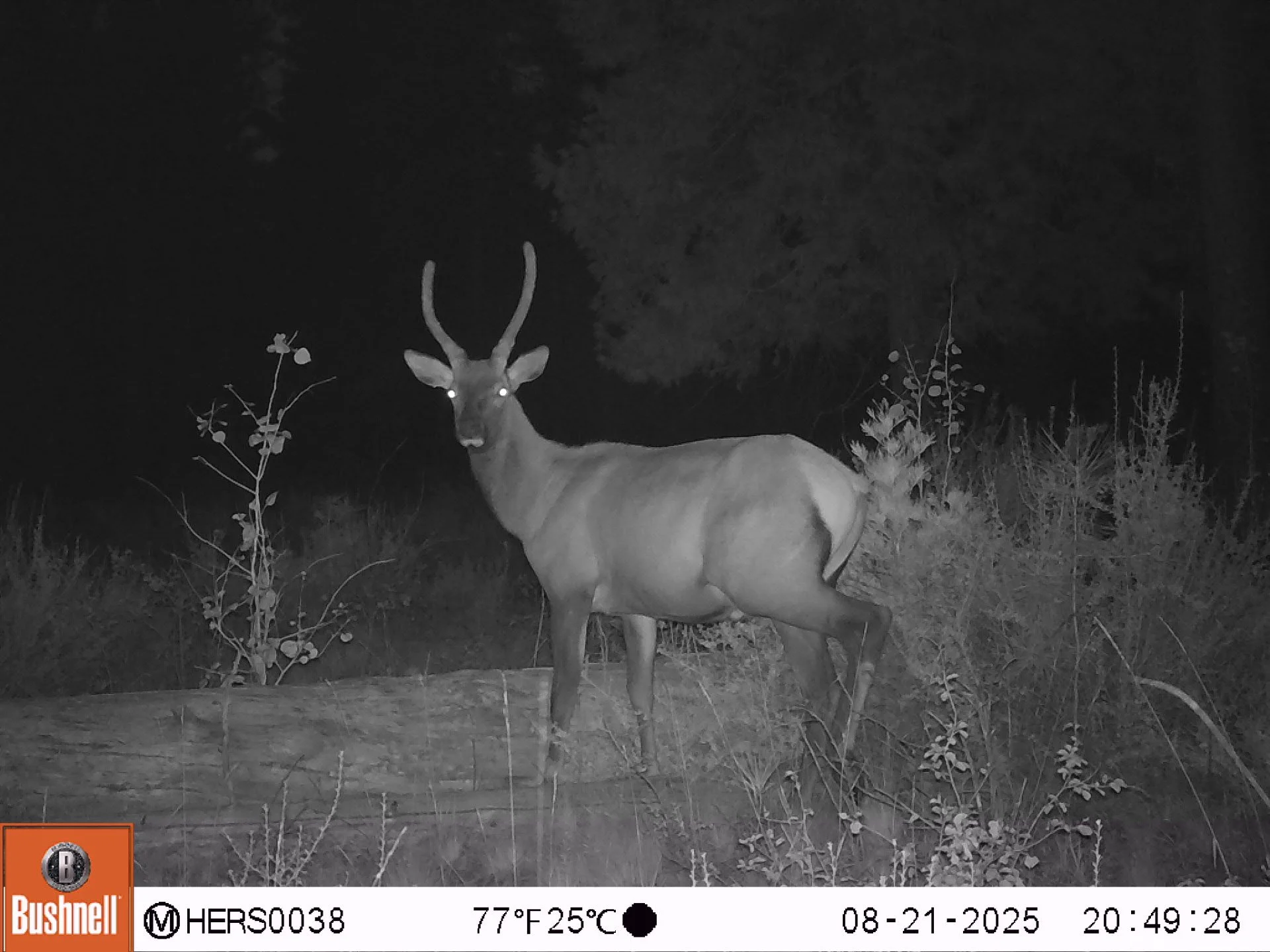
Cameras placed by OSU-Cascades have captured deer, elk, coyotes, bobcats, and even flying squirrels where the wildlife crossings are slated to go. Photos: HERS Lab, OSU-Cascades.
In the Oregon Department of Transportation office, key staff are deeply engaged in other aspects of moving the project forward, including building the project team that will design the structures, delineating the structure footprints to inform both design and construction, and securing support from transportation committees that represent industry and others who rely on Highway 20 for transport.
Meanwhile, I've been working with the staff at Oregon Wildlife Foundation to secure contractors to complete the necessary ground surveys ahead of design and construction.
These are just some examples of the behind the scenes work that B2S coalition partners are engaging in during this phase of this multi-year effort.
Central Oregon LandWatch is grateful for the tremendous support of our donors which has allowed us to play the coordinating role in the coalition, helping ensure this ambitious project continues to make forward progress.
Next time you’re traveling back from Suttle Lake, marveling at the beauty in all directions, know that soon, you, your friends and family, and the wildlife that call this spectacular place home, will all be able to safely reach their destination.