The Harms of Water Waste
In part three of our five-part series on water waste, we explore the harms of leaving water waste unaddressed.
Our Rivers Bear the Brunt
Each autumn, the Upper Deschutes River is almost completely turned off at Wickiup Dam to fill the reservoir for the next irrigation season.
Then, come spring, the spigot is turned on and irrigation water floods the river channel down to Bend and into canals—stripping away wetland vegetation and eroding the streambank in the process. During the height of summer, roughly 90 percent of the Deschutes River’s water is siphoned off to serve irrigation, leaving only a trickle in the river downstream of Bend.
The ecological consequences of managing the Deschutes River as an irrigation storage-and-delivery system have been profound.
First, the loss of bull trout.
Then, redband trout populations fell to perilous levels.
Most recently, the Oregon spotted frog was listed as threatened under the Endangered Species Act in 2014.
The widely fluctuating flows in the river today have disconnected the fish and frogs from their prime habitats, causing these species to decline at alarming rates.
Similar stories are also playing out on the Crooked River and Whychus Creek, where water management is pushing native species like steelhead and chinook salmon to the brink.

The Deschutes River. Low winter flows left the riverbed exposed below Wickiup Reservoir in October 2020. Photo: Paul Riedmiller
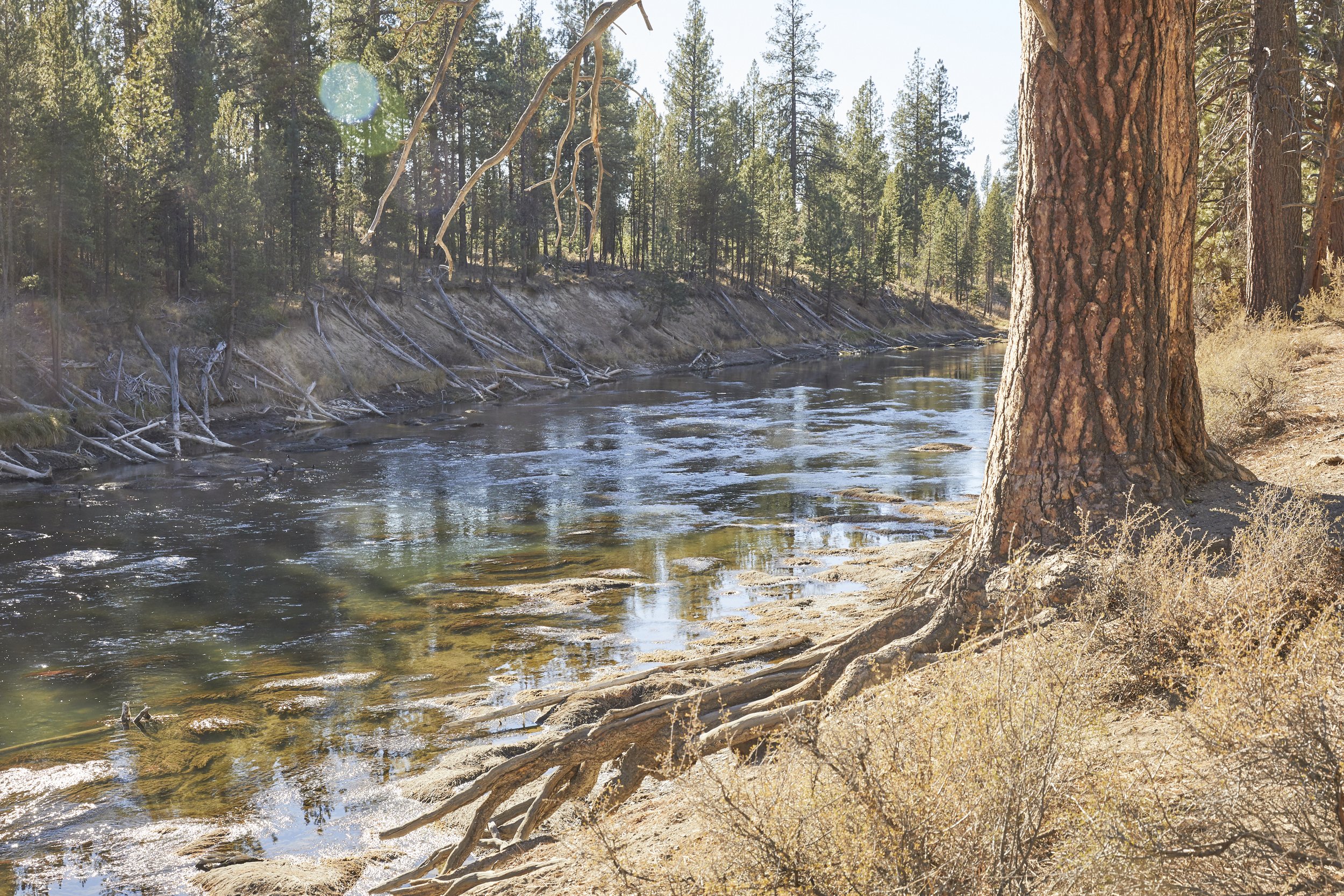
The Deschutes River. Drastic flow fluctuations have heavily eroded the riverbank below Wickiup Reservoir. Photo: Paul Riedmiller
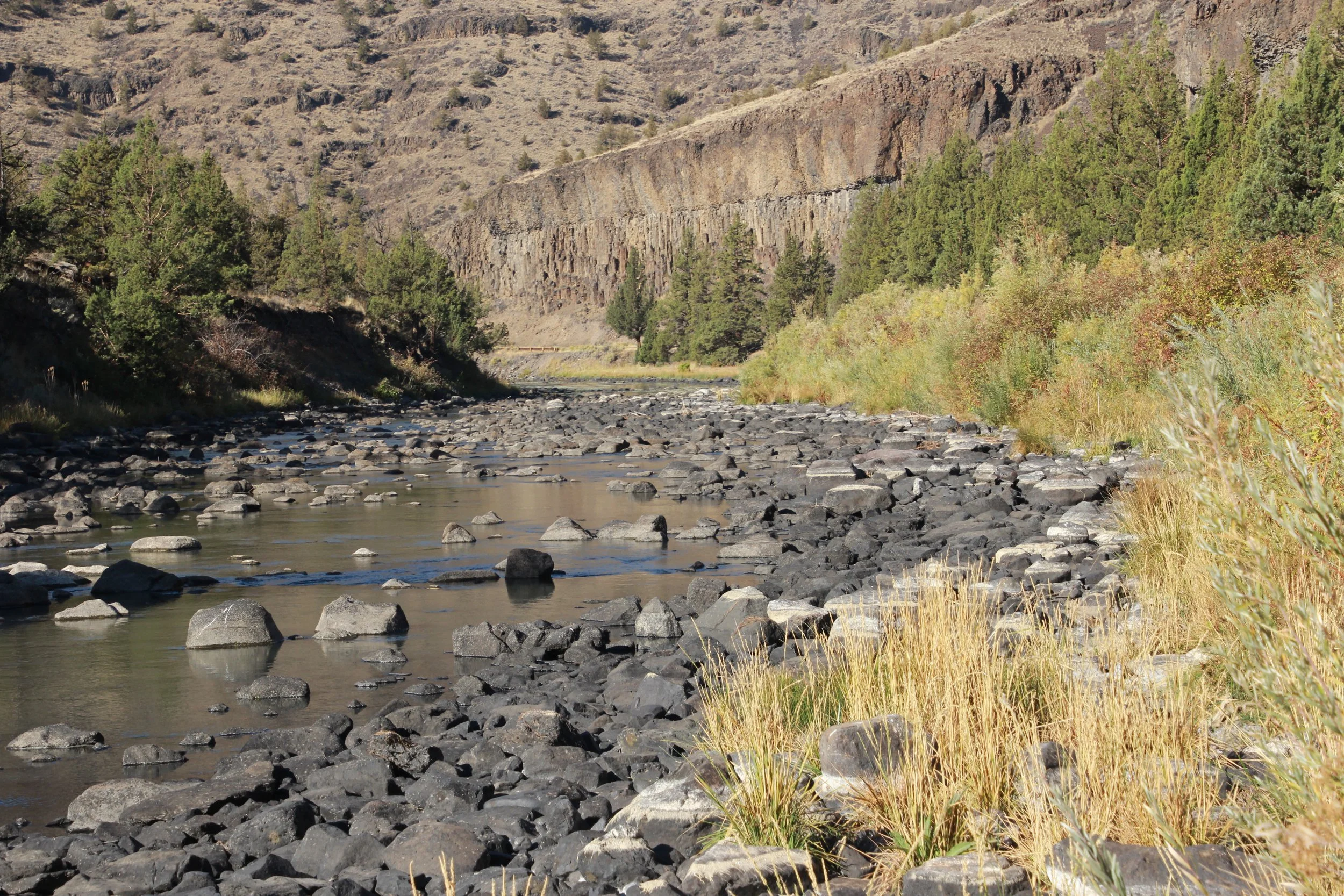
The Crooked River. Flows below Bowman Dam fell to a paltry 10 cfs in September 2022. Photo: Jeremy Austin

The Crooked River. This 16-inch redband trout mortality was observed near Chimney Rock on Sept 23, 2022. Photo: ODFW
Farmers Are Left High and Dry
For productive agriculture, the stakes are similarly dire.
In NUID—the most productive agricultural region in the Basin—recent droughts have meant their junior water rights were cut back as senior water right holders are entitled to their full allotment before junior water rights are served. Curtailments in 2022 resulted in fallowing nearly 25,000 acres: 40% of the entire district's irrigated land.
Not having reliable access to water is causing farms to go out of business and calling into question the fate of Central Oregon’s most productive agricultural region.
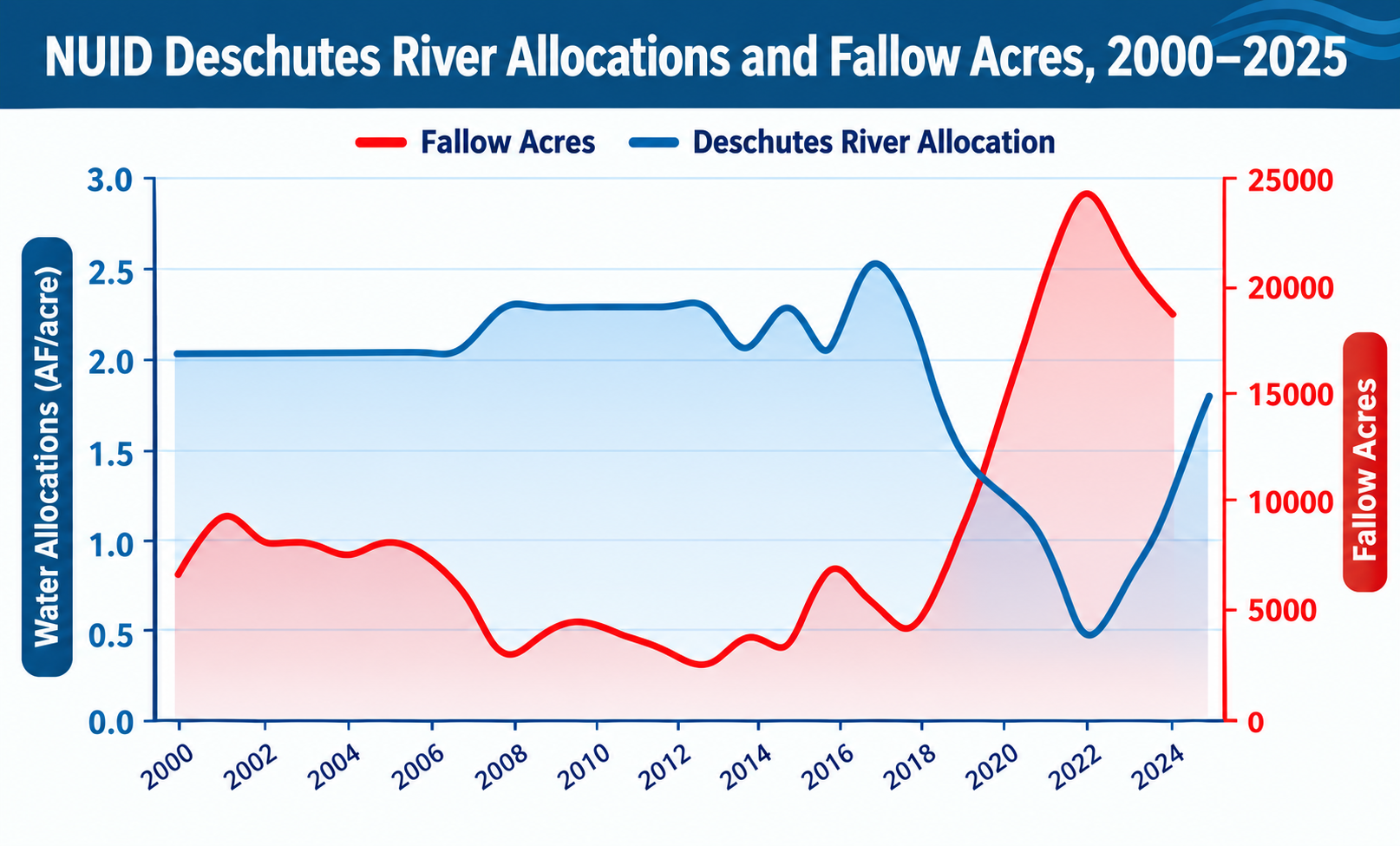
Source: North Unit Irrigation District. 2024. North Unit Irrigation District Crop Report. C. Cowsill, personal communication, January 28, 2026.
Uncertainty for Cities
Our cities and towns are obligated under Oregon’s land use system to accommodate urban population growth and provide public services and infrastructure to serve that growth.
For a system where no additional surface water is available, and the future availability of groundwater is uncertain, cities like Redmond are faced with an unclear path to address future urban water demands.
Meanwhile, senior water rights holders, many on fragmented farmland out of agricultural production, continue to receive nearly their full water allotment before more junior water rights holders receive any—including the Deschutes River itself, which did not have a legal pathway to secure a water right for its own streamflow until 1987.
During recent droughts, this imbalance has been extremely harmful and on full display: those who need water least often get the most, while the most productive farms in the region, municipalities, and instream ecosystems struggle to get by with whatever water is left.
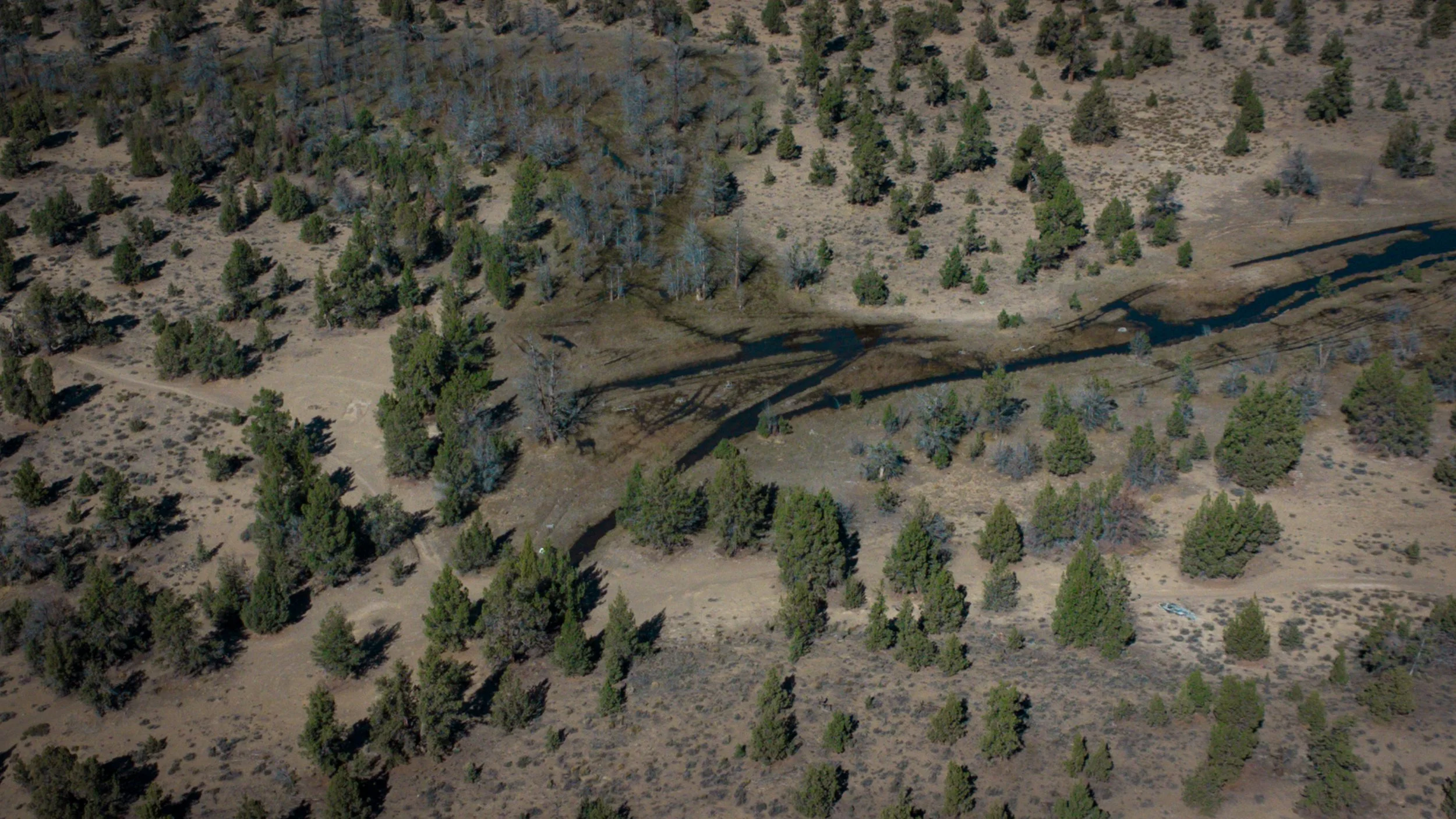
Excess COID water remains pooled on public land east of Bend in fall 2025—even after flows were shut off on October 15.
Undefined, Unmeasured, & Unenforced
While protecting against water waste is a central tenet of Western water law, enforcement against waste has largely failed in Oregon and other Western states. The failure to enforce against waste principally rests on three factors (1):
First, there’s no clear definition of waste. Oregon statutes do not define the term “beneficial use without waste,” leaving significant room for interpretation and inconsistency in enforcement.
Second, there is a lack of information on actual water use. A 2022 OWRD report found that only 17 percent of water rights in the state are required to measure and report water use. (2)
Third, there has been minimal political support to enforce against waste.
Thankfully, Oregon lawmakers and state agencies are increasingly recognizing the urgency of water challenges facing our communities—having recently proposed a slate of new bills and embarked on new rulemaking in an effort to modernize Oregon’s water laws.
For example, in 2025 the legislature passed House Bill 3806, which established the Deschutes River water bank pilot program to improve how water is shared between instream and out-of-stream uses. While the water bank pilot is a good start, it will require the full participation of irrigation districts to be effective and much more needs to be done to address irrigation district efficiency and waste.
The extraordinary additional water rights granted in the 1930s by court decree to Deschutes Basin irrigation districts also came with the stated responsibility to “conserve all of the water possible with a true regard to the junior water rights.” (3)
Recent efforts to pipe irrigation district canals and reduce seepage losses have made important progress in some districts—such as Three Sisters Irrigation District, which recently completed its final section of canal piping. Arnold Irrigation District has also recently made progress on piping their main canal, helping to significantly reduce the water they divert each year from the Deschutes River. Recent efforts to pipe one of COID’s main canals has generated around $60 million in funding—a project that is estimated to cost $356 million and save 136 cubic feet per second (cfs) of water when completed.(4)
However, over a century later, piping efforts within COID have only conserved around 30 cfs of the estimated 255 cfs of water that could be conserved if both of the district’s main canal networks were completely piped.(5,6)
In other words, some progress has been made, but it's a far cry from the court's 90 year-old-charge to “conserve all of the water possible with a true regard to the junior water rights.” In fact, COID remains the most inefficient irrigation district in the region.(7)
It doesn’t have to stay that way. By reducing unnecessary use (when a water right holder uses more water than is needed to grow a crop) and better matching the amount of water delivered to what crops actually need, COID alone could conserve anywhere from 28,000 to more than 70,000 acre feet of water each year.
To put that into the classic swimming pool metric, that’s enough water to fill 34,000 Olympic swimming pools.
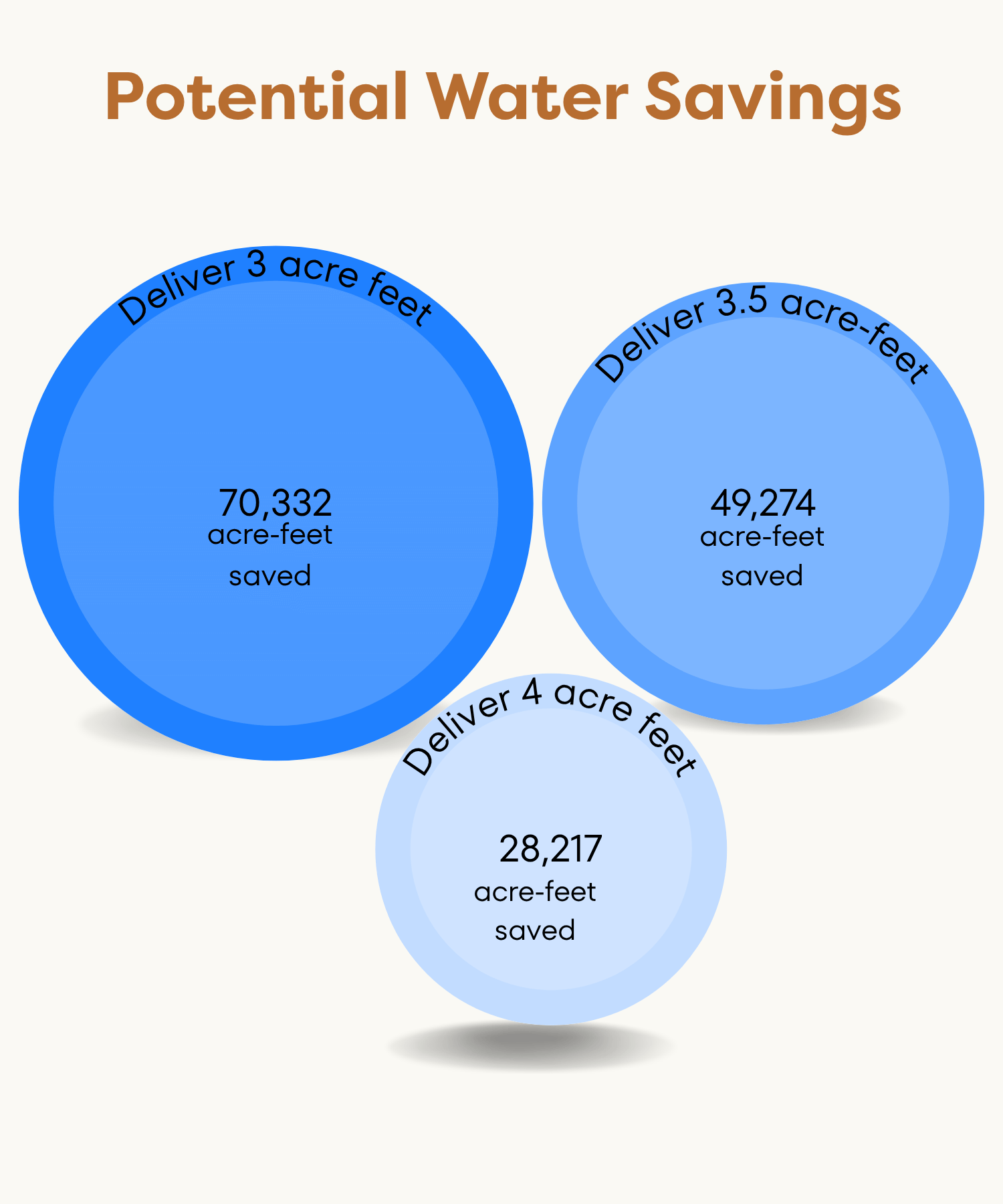
COID STATS (8)
Total # of irrigated acres: 41,115 acres
Current water delivered: 4.7 acre-feet per acre
What crops need: Most crops in Central Oregon—like alfalfa, the region’s most common—require no more than 3 acre-feet per acre of water during any given growing season.
Source: Central Oregon Irrigation District. 2022. Water Management and Conservation Plan.
In addition to unnecessary waste, there is also waste from non-beneficial use (e.g. irrigation water applied to cheatgrass or other weeds) and quatifying the volume of that is even more challenging. However, addressing non-beneficial use waste in the Basin could conserve substantially more water.
While unnecessary and non-beneficial use may have been acceptable in the past, we are no longer in an era where this waste can continue.
With water scarcity putting our rivers and our family farms at risk, all while threatening future growth within our cities, it’s time to act.
Sources
1.) Russell, K.A., 1997. Wasting Water in the Northwest: Eliminating Waste as a Way of Restoring Streamflows. Environmental Law, pp.151-201.
2.) Oregon Water Resources Department. 2022. 2022 Legislative Report Water Use Measurement and Reporting.Water Resources Department : Legislatively Required Reports : Legislative and Budget : State of Oregon
3.) In re Water Rights of Deschutes River & Its Tributaries, 148 Or 389, 36 P2d 585 (1934)
4.) Natural Resources Conservation Service and Deschutes Basin Board of Control. 2026. Draft Environmental Impact Statement for the Central Oregon Irrigation District Pilot Butte Infrastructure Modernization Project. . Deschutes County, Oregon.
5.) It's important to note that there is no up-to-date, publicly available data on the total volume of water that has been conserved by completed canal piping projects within irrigation districts in the Deschutes Basin.
6.) Black Rock Consulting. 2017. Central Oregon Irrigation District System Improvement Plan. Prepared for Central Oregon Irrigation District. Bend, Oregon.
7.) Newton D., and Perle M. 2006. Irrigation District Water Efficiency Cost Analysis and Prioritization. DWA Final Report. Bend (OR)
8.) Central Oregon Irrigation District. 2022. Water Management and Conservation Plan.
MORE POSTS IN THIS SERIES